


















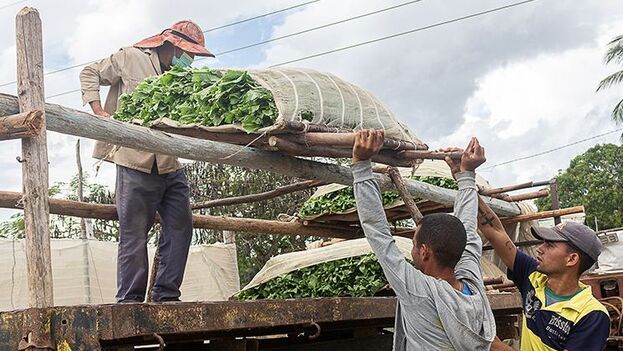
A recent warning from official sources highlights the resistance of Cuban farmers, especially those involved in tobacco cultivation, to embrace the banking reform process, known as “bancarización,” in Pinar del Río. The Cuban guajiros, as they are locally known, appear to be hesitant to adapt to the changing landscape of financial transactions, much to the authorities’ dismay.
The crux of the issue, as acknowledged by the Guerrillero newspaper, lies in the fact that not everyone in rural areas possesses a mobile phone. In addition, poor connectivity in these regions and the lack of bank accounts among some workers make the shift towards digital payments challenging.
Niurka Rodríguez, the deputy governor of Pinar del Río, expressed her frustration with her two-year-long effort to convince cooperative members to adopt digital payments through various applications like Xetid, EnZona, and Transfermóvil, all to no avail. Even market administrators within the province have not made the effort to incorporate electronic payments into their daily routines.
According to authorities, there is no justifiable reason for the lack of bancarización in Pinar del Río. The province boasts 15,000 bank accounts, adequately equipped markets, and officials ready to guide the process. Yet, the guajiros persist in demanding cash payments, emphasizing their preference for “money in hand.”
Armando Blanco, a state tobacco administrator, elucidated, “If there is no money, they won’t work.” He, for one, sees the convenience of paying his workers digitally but notes their preference for cash, as it allows them to make essential purchases on their way home.
The scarcity of labor in the field adds to the tension, with Blanco paying his workers 300 pesos a day along with meals and a share of the harvest. Still, without cash, finding employees becomes a challenge.
Ibraúl Hernández, another cooperative president, acknowledged the resistance and emphasized that traditional guajiro life involves the younger generation handling technology and electronic payments. Older farmers, however, prefer having physical cash, often stashed away for future investments.
The inadequate conditions for electronic payments extend to ration stores, where connectivity issues can result in rejection of card payments. Hernández emphasized that without setting the necessary conditions, the state cannot expect farmers in remote areas like La Palma or Viñales to embrace magnetic cards.
Cash payments also bring logistical challenges since substantial cash withdrawals require advance orders due to unprepared banks. The battle to modernize guajiros has become a significant concern for local leaders.
Tobacco growers, who are considered the most resistant to change, insist on cash due to practical reasons, such as transportation. To travel from rural areas to the main city, drivers often only accept cash payments.
Economist Yadira García pointed out the guajiros’ perception that money in the bank isn’t as tangible as cash, making it a less attractive option, especially in areas where ATMs and bank branches are scarce.
The question remains: Will bancarización be imposed in rural areas? With an increasingly severe energy crisis, blackouts, and internet interruptions, neither the official press nor leaders are willing to provide a definitive answer.
SUPPORT NIGERIAN CANADIAN NEWSPAPER CANADA
If you like our work and want to keep enjoying what we offer, kindly support us by donating to the Nigerian Canadian News by clicking here
Share your thoughts in the comments section below
Do you want to share any news or information with us? If yes, contact the publisher at publisher@test1.nascitest.club