



















By Godwin Ihesie
Botanical Name:Momordicacharantia
Family:Cucurbitaceae (gourd family),
Common names:Balsam pear, bitter gourd, bitter melon, karela, wild cucumber, bitter cucumber,
Th local names:“Okwunuolo” (Igbo) “Daddasu” (Hausa) and “Ejirin” (Yoruba).
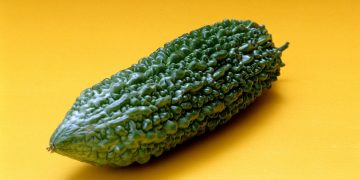
Description: Bitter melon is a tender perennial climber that grows in most tropical parts of the world including East and West Africa, Asia, the Caribbean and South America. It grows very well during the rainy season here in Nigeria. It is found mainly in home gardens and farmlands as a troublesome weed. The leaves are dark green, and the young fruit is green and looks like a warty or lumpy gourd, oblong in shape and resembles a small cucumber. As the fruits mature, it turns to yellow to orange color which splits to release numerous reddish-brown or white seeds.
Part Used: whole plant, leaves, fruit and seeds, roots are commonly used in traditional medicine and all parts of the plant taste very bitter.
Constituents: The leaves and fruits of bitter melon contain alkaloids (e.g., momordicine), glucoside – a saponin-like substance, resins that give the plant an unpleasant taste, an aromatic volatile oil and mucilage.
Therapeutic Actions: Bitter melon, like other bitter-tasting herbs, have digestive, stomachic and appetite stimulating actions, other actions includes: laxative,alternative, antimicrobial ( antibiotic, antiviral,antiparasitic, antimalarial, and antifungal), vermifuge, aphrodisiac, anti-inflammatory, immune booster, alternative, antitumor, hypoglycemic (lowers blood glucose), hypotensive (lowers blood pressure), fat burner: reduces cholesterol and high triglyceride level, tonic, stimulant, etc.
The method of Preparation: The leaves and the green fruits of bitter melon are more efficacious during the rainy season. The whole plant is usually harvested during this period, washed and used fresh or dried in so many ways: as water extract, infusion (tea), decoction (boiling), tinctures (alcoholic extraction), powder or capsule. However, due to the very strong bitter taste, the powdered leaves of better melon are commonly administered in tablets or capsule forms. Bitter melon can be used alone or in combination with other herbs either internally or externally.
Medicinal Uses
Balsam pear for Gastrointestinal Problems:
The water extract made from the fresh plant, the decoction or the tea can be taken orally as an effective bitter tonic that stimulates the entire digestive system. Also, bitter gourd:
- Is an appetite stimulant,
- It treats abdominal pain, colic, sluggish digestion, flatulence, and gas.
- It exerts a mild laxative effect on the colon and helps in most cases of constipation,
- A mixture of the juice from fresh Balsam pear leaves and those from white onions and lime (or lemon) is taken in cases of gastrointestinal infections such as cholera, diarrhea, dysentery and chronic colitis, halitosis, hemorrhoids, etc.
- The raw sap extracted from the fresh plant is an excellent worm expeller in children. It is also useful in expelling tapeworm in young children.
Balsam Pear as Blood Purifier:
As an alternative, the herb can be taken as a fresh water extract, infusion (tea) or as a decoction to help purify the bloodstream, liver, kidney and colon. In traditional medicine, people who consume excessive red meat, alcoholic beverages, spirits, nicotine and caffeine are usually advised to take a mixture of the Balsam pear and “stone breaker” (Phyllanthusnuriri) as tea periodically. A combination of these herbs is known to prevent: The formation of gallbladder, kidney and urinary bladder stones, liver problems (such as hepatitis – inflammation of the liver) and malaria. This combination is equally given orally as a detoxification therapy in the treatment of skin infections, such as ring worms, scabies, psoriasis, measles, itching, boils and a good remedy for internal heat, mild cases of gout, arthritis or rheumatism.
Balsam Pear as a hypoglycemic Herb:
It has been noted scientifically that taking the fresh juice or the decoction of the Balsam Pear on an empty stomach every morning – 2 to 3 hours before breakfast will not only help to lower the sugar level in the blood, but will also help in preventing most of the complications arising from diabetic condition, e.g. the needle and pin sensations which most diabetic patient experience under the feet and the visual defects, hypertension, recurrent boils and infections that are often associated with the condition.
Balsam pear as Female Correctives:
Drinking the fresh and green balsam pear leaves extracted with fresh palm wine or lime juice is known to be one of the best female correctives used in:
- Dispersing uterine fibroid seedlings (i.e. fibroids in their formative stage) or preventing its formation,
- Treating acute and chronic pelvic inflammatory disease (P.I.D) associated with sexually transmitted diseases,
- Traditional medicine to “flush” the Fallopian tubes and to treat female infertility,
- The treatment of menstrual disorders, chronic vaginal discharge, leucorrhea, vaginitis, etc., and this is effective when the plant is combined “stone breaker” (Phyllanthusnuriri).
The Antitumor of Balsam-pear:
It is on record that traditional healers in many rural communities in tropical countries used the matured fruit juice and/or infusion of the leaves is used in the treatment of breast cancer and leukemia. Presently, several in vivo studies have shown that the whole plant (leaves, fruits, and seeds) of bitter melon contains a protein called “MAP 30,” which effectively disperses and checks the growth or tumor in the breast, liver, prostate, etc., in their early stages of formation.
Balsam pearas an Antimicrobial Agent:
The decoction, infusion or whole plant of bitter melon extracted with fresh palm wine or lime juice has long been known and used by the indigenous people in the developing part of the world for the treatment of all kinds of bacterial and viral infections: colds, fevers, rhinitis, pneumonia, toothaches and mouth infections, measles, hepatitis, etc. Researchers have isolated several phytochemicals (plant chemicals) from the leaves, fruit and seeds of Momordicacharantia which inhibits the replication of HIV/AIDS, herpes and other viruses in vitro (in the test tube only).
External Uses of Balsam-pear:
The fresh leaves of bitter melon are prepared as fresh sap, decoction, or as a tincture used as a topical remedy for the treatment of all kinds of skin problems such as scabies, itchy rashes, chapped skin and burns, eruptions and acne, heat rash eczema, insect bites, hemorrhoids, etc.
Caution:Balsam-pear should be avoided during Pregnancy.