



















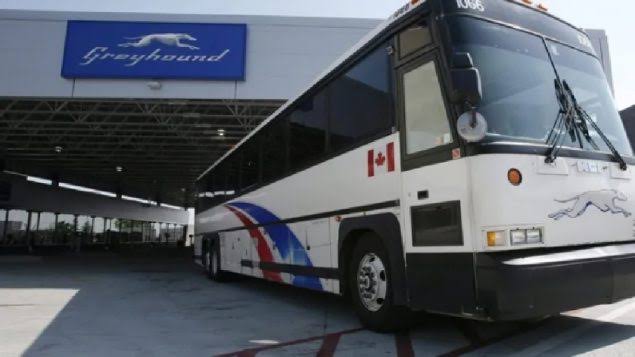
Bus Company, Greyhound Canada has disclosed that it is shutting down all of its remaining bus routes in Canada, permanently.
It would be recalled that the iconic bus carrier pulled out of Western Canada in 2018. It then put its remaining routes in Ontario and Quebec on pause when COVID-19 hit in 2020, but now it is pulling out of domestic Canadian service permanently.
Spokesperson Stuart Kendrick said “A full year without revenue has unfortunately made it impossible to continue operations.
“We deeply regret the impact this has on our staff and our customers, as well as the communities we have had the privilege of serving for many years.”
It is important to note that Greyhound Canada has been in operation in one form or another for nearly a century. The company says anyone with a ticket booked can get a refund up until the end of June.
Harping on the development, Anthony Perl, a professor of urban studies at Simon Fraser University in Burnaby, B.C., averred that the news did not come as a surprise, since the company’s business model has been on a slow decline.
“They’re a for-profit company and they’ve proven after trying for decades that you can’t make a profit trying these routes with relatively small populations,” he said in an interview.
Anthony said governments need to step up to fill the gap to ensure that bus-based transportation networks can exist, either by subsidizing them like urban bus systems or by helping to develop a hybrid model such as a co-operative, which many other countries have seen success with.
He said “Bus services are an essential part of the future because of their lower environmental impact. We just have to think of a way to make it economically viable.”
Meanwhile, it’s important to state that while Greyhound bus service between Canadian destinations will end, Greyhound’s U.S. parent will continue to operate five cross-border routes that either start or finish in the U.S. They are: Toronto to Buffalo, N.Y, Toronto to New York City, Montreal to Boston, Montreal to New York City, Vancouver to Seattle.
In a swift reaction, Federal Transport Minister Omar Alghabra sayid the federal government was disappointed to hear of the company’s decision, because so many communities depend on bus service to connect them to the rest of the country.
In a tweet, the minister said “We will work with our provincial partners to explore options to address this gap and provide Canadians with safe, reliable and affordable transportation across the country”.
The Amalgamated Transit Union (ATU), which represents workers at the bus line, said about 400 jobs will be lost, of which 305 were unionized positions, and governments must bear some of the blame.
ATU president John Di Nino said “The collapse of Greyhound was not a foregone conclusion; this could have been avoided if our federal and provincial governments actually cared about those in remote communities who relied on intercity bus service”.
On its part, the federal NDP also laid blame on the government. “The loss of all remaining Greyhound bus routes leaves many communities without affordable, safe passenger transportation,” Transportation Critic Taylor Bachrach said in a statement.
“And it disproportionately affects the most marginalized residents, including Indigenous people and seniors.”