


















Powerful U.S. lawmakers have stalled the proposed sale of attack helicopters to Nigeria over concerns that the administration of President Muhammadu Buhari was “drifting towards authoritarianism.”
This development came at a time when Nigeria is overwhelmed by multiple security challenges which include a 12-year insurgency by Boko Haram militants in the North-eastern part of the country, rising cases of high-profile kidnapping-for-ransom campaigns and bandit attacks and separatists agitations in the south-east and south-west.
While citing U.S. officials and congressional aides that have tangible information about the blocked ammunition deals worth $875 million, Foreign Policy, a United States newspaper, revealed that top guns in Washington were determined to push the Biden administration to have a rethink about the U.S. relations with Nigeria in a bid to strike a balance between national security and human rights.

During a Senate hearing with the Secretary of State in June, the chairperson of the U.S. Senate Foreign Relations Committee, Bob Menendez, called for a “fundamental rethink of the framework of our overall engagement” with Nigeria.
Foreign Policy made it known that the state documents it sighted showed that in addition to the 12 AH-1 Cobra attack helicopters accompanied by defence systems, the blocked proposed sale included “28 helicopter engines produced by GE Aviation, 14 military-grade aircraft navigation systems made by Honeywell, and 2,000 advanced precision kill weapon systems—laser-guided rocket munitions.”
Though the U.S. Department of State labelled its relationship with Nigeria as “among the most important in sub-Saharan Africa” to whose military it has offered limited funding for training and education programmes, recent happenings in the country have raised concerns among human rights advocates.
Nigerian protesters who called for police reform last year were attacked by security operatives and miscreants allegedly backed by the state, leading to few deaths, while no security official was prosecuted for the massacre of hundreds of Shiites in Kaduna in December 2015.
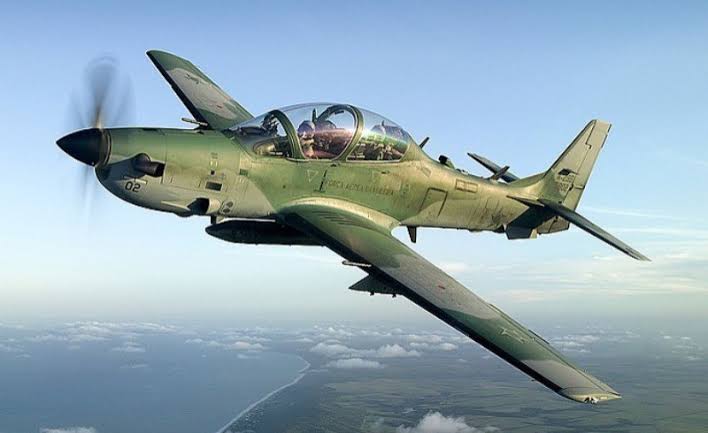
Nigeria has depended on the United States arms deals to help it curb insecurity in the past and recently got some fighter Tucano jets from the United States. Meanwhile, the latest action by U.S. lawmakers will not be the first time the country would suspend arms sales to Nigeria.