



















Despite the continued advise of the federal government against all non-essential travel abroad, and as many provinces remain under strict lockdown orders that limit or outright ban gatherings, data analysis by marketing research firm Environics Analytics for The Globe and Mail suggests that more than a million Canadians travelled away from their home postal code over the Christmas break.
It also disclosed that young people and wealthy, white Canadians were more likely to travel overnight over the holidays despite provincial lockdown measures.
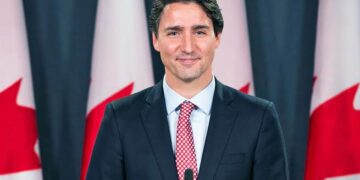
Following this revelation, Prime Minister Justin Trudeau has in strong terms urged anyone planning a trip abroad to cancel it.
“My message to Canadians remains clear, no one should be taking a vacation abroad right now,” Trudeau said.
With March break around the corner, the prime minister emphasized: “Don’t book a trip for spring break.”
According to the Environics Analytics findings, approximately 1.2 million people in Canada spent at least one night away from home between Dec. 23 and Dec. 30.
Compared to travel rates in the week before Christmas, young people living in urban areas and Canadians from wealthy, predominantly white areas both increased their overnight travel over the holidays by around 20 per cent.
While it was noted that seniors also helped drive the surge, Vito De Filippis, director of business development at Environics Analytics, said rates of travel among seniors were already “really high compared to everybody else.”
“Maybe there was some of that Christmas travel going on, but I think this is just a group that tends to, for whatever reason, need to stay with friends or family on a regular basis,” De Filippis sad, citing potential childcare or health concerns among seniors.
Analysis revealed that overall, holiday travels were 58 per cent lower than the same week in 2019, before the pandemic.
“So for the most part, people are listening to the recommendations and staying home,” the director said.
Meanwhile, data revealed that Ontario and Quebec saw the highest number of overnight travellers, but that can likely be attributed to the fact that they’re the most populous provinces, De Filippis said.
Environics estimates that 3.3 per cent of Canadians travelled over the holidays. Two-thirds of those who travelled were white; while one-third were part of a visible minority group.
It was disclosed that the analysis was based on a database of location data comprising 20 million mobile phones, which analysts then cross-referenced with census demographics and postal codes to build a profile of who was travelling. No identifying details, such as names, were part of the analysis.
“All we know is a device and we know locations, which is an opt-in measure on any cellular phone. So people can opt out of providing their signal,” De Filippis said. “We know nothing about the device other than it exists.”
Remarking on the development, Minister of Public Safety Bill Blair said “To be very clear, it is not the time to travel”.
“Temporary restrictions remain on optional and discretionary travel … we will continue to strongly advise Canadians against travel abroad, unless it’s absolutely necessary,” he said, adding that the government has scaled up the presence of border patrol and public health officers to ensure travellers follow quarantine protocols.
“Quarantine has been, and continues to be, our most effective measure,” Blair reiterated.