


















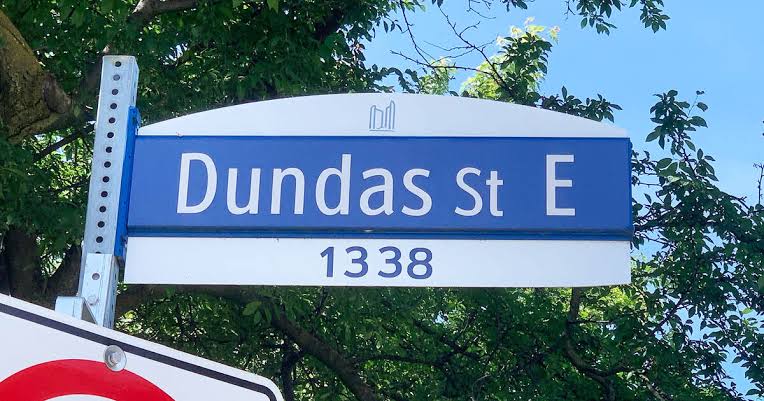
In what has become a major debacle, Toronto’s City Manager’s office has demanded the renaming of Dundas Street and other civic assets bearing the Dundas name following controversy surrounding the history of who they are named after.
According to reports, the recommendation was done following a petition that was signed by over 14,000 people calling for the name of the street to be changed as anti-racism protests sparked in Toronto and around the world.
Speaking to newsmen, the creator of the petition, Andrew Lochhead, averred that he conceived the idea after the Black Lives Matter protests, in particular the knocking down of the Edward Colston statue in Scotland, which led him to the knowledge of Henry Dundas.
It is imperative to note that Dundas Street, which runs through Toronto and several other southern Ontario cities, was named after Henry Dundas, an 18th-century politician who delayed Britain’s abolition of slavery by 15 years, reports said.
In the recent release, the city highlighted “Dundas’ role in the continued subjugation of Indigenous peoples in Canada in his capacity as British Home Secretary”.
Reports have it that ridding Toronto of the Dundas name will cost an estimated $5.1 million to $6.3 million. Costs include renaming Yonge-Dundas Square, two subway stations and all related signage.
Similarly, another petition was circulated against the renaming of the street shortly after the original in 2020. It began gaining more signatures after the recent announcement.
The release continued that the report done by City Manager Chris Murray was based on “feedback from community leaders and business groups including leaders from Black and Indigenous communities, as well as an extensive review of academic research on Dundas’ role in abolition and more than 400 global case studies on the evolution of commemoration and naming policies”.
Harping on the development, Toronto Mayor John Tory supported the decision, noting that it is an opportunity for the City to make a statement about “including those who have been marginalized and recognizing the significant effect past history can have on present day lives.”
The mayor went on to quip that Dundas himself has no connection to the City of Toronto; adding that there are almost 60 names that have been brought the City’s attention to be renamed based on connections to controversial past events and figures.
The report clarified that there are at least 12 streets named after slave owners.
But, Tory succinctly stated that the process of determining whether to rename a street will have to be done in an “orderly manner.”
In a press conference, the mayor said “You want to make sure where you make a change, it is a thoroughly justified thing to do”.
“Dundas Street was a case by itself in the sense that I had asked for a specific report in light of all the interest and concern that existed in the community about Dundas Street and Mr. Dundas”.
He added that there will be a report next spring that outlines the framework on how to make future decisions going forward.

That coincides with the hope that Lochhead had when he first created the petition – the idea that renaming Dundas would be the first of many actions.
Lochhead said “One of the original aims … one of the key demands was not only the discovery process, but that any work going forward should centre Black and Indigenous voices and I’m really thrilled that the City has made a strong commitment to that — not only in words, but in discernible and measurable action”.
Murray wrote the petition led to a “broader review of how the City commemorates public figures and events,” which has now been dubbed the “Recognition Review.”
The city manager noted that “Most commemorations in Toronto represent the stories of white settler males in positions of power”.
Lochhead, while expressing excitement over the City’s recommendation, did voice disappointment that it had taken this long for any action to be taken.
He said “It’s not like anyone hasn’t asked for this before, we just refused to listen. So it’s a mixed emotion”.
“[The] events of the last few weeks, namely the locating of mass and unmarked graves at Indian residential schools in our country have shown us the urgency with which we need to act on these commemorations, these celebrations of genocide and colonial violence and enslavement in our cities”.
“I think it should make it clear why we should do something and why doing nothing is unacceptable,” he said.
It was stated that the Executive Committee will review the report on July 6 and if approved, it will then go before Toronto City Council on July 14 and 15.
The release said “As the report notes, this is not erasing history – as some critics of such a change may charge – this is recognizing a larger history that we must not ignore”.
“By proceeding with this change, we are sending a strong message as a City about who we collectively honour and remember in public spaces and we are reaffirming our commitment to addressing anti-Black racism and reconciliation with the Indigenous communities.”