

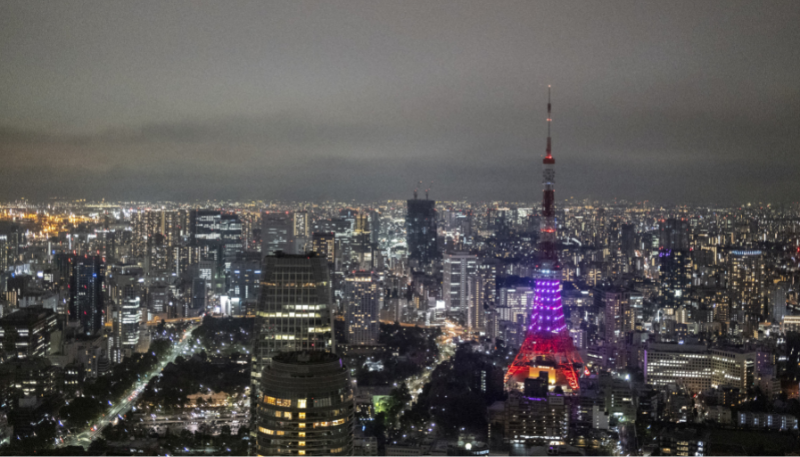
The government of Japan has urged people living in Tokyo to turn off unused lights and save energy while the country endures extremely hot temperatures.
Recently, the temperature rose to 40.2°C in Isezaki, north of Tokyo, the highest ever for this month. In downtown Tokyo, the temperature rose to nearly 35°C recently, higher than the recent forecast of 34°C.
Tokyo’s local government urged residents of the area to “turn off unused lights while using air conditioners” between the peak hours of 3 pm and 6 pm.

Kaname Ogawa, director of electricity supply policy at Japan’s economy and industry ministry, said the recent demand was higher than expected because the temperature surpassed the recent forecast.
Ogawa said: “We are struck by unusual heat for the season. Please cooperate and save as much power as possible.”
Ogawa however said people should appropriately use air conditioning and take precautions against heat stroke.
According to Mainichi, a local newspaper, over 250 people were admitted in Tokyo hospitals over the weekend for treatment of heat stroke.
Heat stroke is a major concern since a lot of older Japanese tend to avoid the use of air conditioning, partly out of habit and partly to avoid running up big electricity bills. Also, older Japanese homes tend to lack insulation and are chokingly hot in the summer and extremely cold in the winter.

Meteorologists announced the quickest end to the annual summer rainy season since the Japan Meteorological Agency started keeping records in 1951. Usually, the rains affect the summer heat, often till July. With hot air emanating from a powerful high atmospheric pressure system stalling over the Pacific Ocean, high temperatures were expected through early July.
Power supply is relatively tight after Japan did not use most of its nuclear reactors after the 2011 meltdowns in Fukushima, Japan.
Prime Minister Fumio Kishida’s government has been trying to restart more nuclear reactors that have scaled through upgraded safety standards.
Also, Japan faces a shortage of fossil fuel imports amid sanctions against Russia over its invasion of Ukraine.
SUPPORT NIGERIAN CANADIAN NEWS
If you like our work and want to keep enjoying what we offer, kindly support us by donating to the Nigerian Canadian News through the button below.


