


















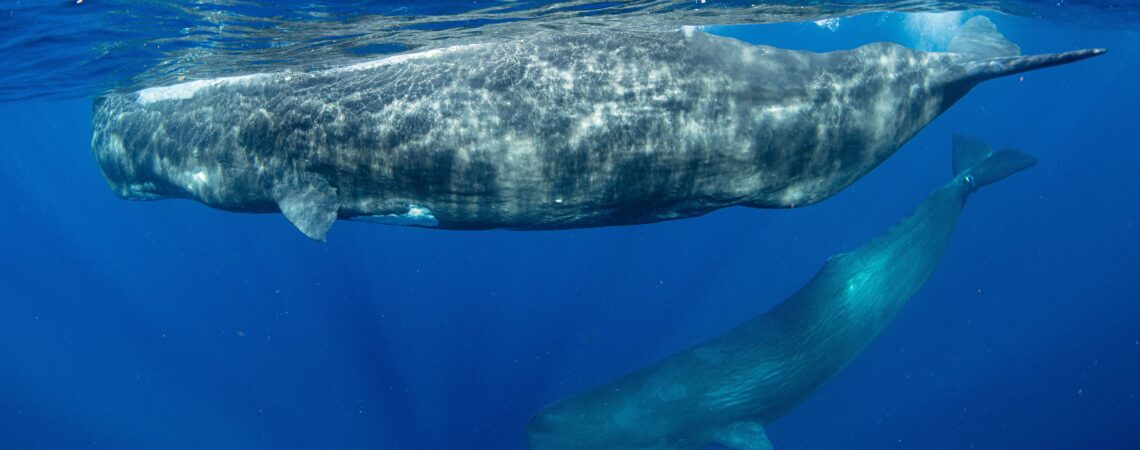
The picturesque island nation of Dominica is charting new waters as it unveils plans to establish the world’s inaugural sanctuary dedicated to sperm whales. Covering a vast expanse of approximately 350 square miles, the sanctuary surpasses the island’s own landmass, making it a significant initiative in marine conservation.
While sperm whales are found in various parts of the globe, Dominica stands out as one of the rare locales where these majestic creatures can be observed year-round. The sanctuary is designed not only to safeguard the vulnerable species but also to combat the pressing issue of climate change.
Enric Sala, the visionary behind National Geographic’s Pristine Seas initiative, emphasized the critical role of sperm whales in Dominica’s climate resilience efforts. Over the past two decades, the sperm whale population in the region has dwindled due to various human-induced threats, including ship strikes, noise pollution, plastic waste, and entanglement with fishing gear.
Positioned off Dominica’s western side, the sanctuary encompasses vital feeding and nursing grounds for the sperm whales. Beyond protection, the initiative presents an innovative strategy to address climate change through carbon sequestration.
Sala explained the unique contribution of sperm whales to carbon sequestration, highlighting their deep-sea dives in search of giant squid. The whales’ resurfacing involves a process that includes breathing, sleeping, resting, and defecating. The nutrient-rich whale excrement, derived from deep-sea squid, fertilizes surface waters, fostering plankton blooms. As these microscopic algae die, a significant portion, laden with carbon, sinks to the ocean depths.
The approximately 250 sperm whales in Dominica’s waters have the potential to sequester an amount of carbon equivalent to that absorbed by an 18,000-acre forest in the United States. Dr. Shane Gero, National Geographic Explorer and founder of the Dominica Sperm Whale Project, noted that the whales’ role in “carbon pump” activities aids in combating climate change.
The establishment of the sanctuary not only seeks to protect the whale population but also aligns with Dominica’s ‘blue economy’ aspirations, leveraging tourism as a means to generate revenue. The anticipated income from tourism is expected to offset the direct costs associated with managing and enforcing the whale reserve.
SUPPORT NIGERIAN CANADIAN NEWS
If you like our work and want to keep enjoying what we offer, kindly support us by donating to the Nigerian Canadian News through the button below
Share your thoughts in the comments section below
Do you want to share any news or information with us? If yes, contact the publisher at publisher@test1.nascitest.club