


















In a crucial decision that will be the first in almost a century, officials have announced that the Calgary Stampede will not go forward this year because of the COVID-19 pandemic.
This year’s event was scheduled for July 3-12, but was deemed unworkable given the ban on large gatherings and the need for physical distancing.
In a statement, Calgary Mayor Naheed Nenshi said “This is very, very tough. Stampede is such an important part of who we are as a community, and it’s hard for me to even imagine what a July without a Stampede will look like”.
He added that “But this year, with this risk, we simply cannot continue to do that.”
Stampede president and board chair Dana Peers said “It was not a decision we came by lightly, but it is a decision in the best interest of public health and safety”. He added that the organization is now looking to possible events in the fall and winter, as well as the 2021 Stampede.
“I promise you that this is not the end to Stampede spirit this year, or in years to come.”
On his part, Tom Sampson, chief of Calgary Emergency Management Agency, remarked that these types of decisions are mandatory given the state of the pandemic in Alberta.
“I think I’ve been in denial. But there was no choice here,” Sampson said. “It was mandatory. It was a decision that needed to take place.”
According to reports, the cancellation is a major blow to a city and province already reeling from the economic impact of the COVID-19 lockdowns coupled with the collapse of energy prices.
Records have it that on average over the past five years, the summer event has brought in $79.2 million in gross revenue and turned a profit of $21.4 million after expenses.
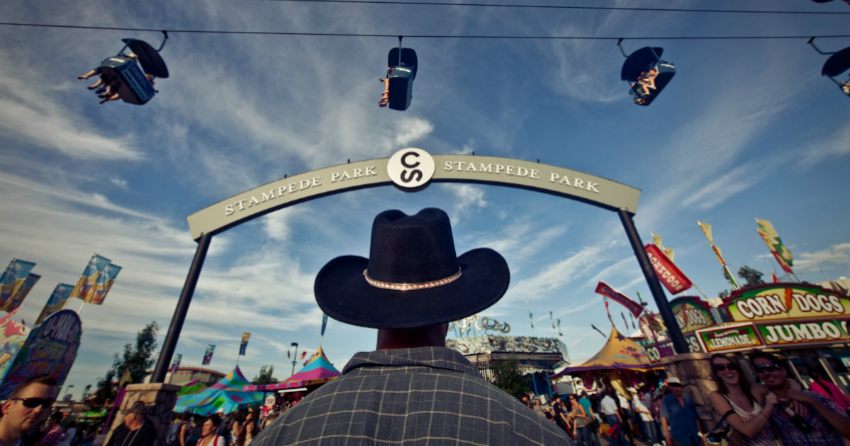
According to Wikipedia, the Calgary Stampede is an annual rodeo, exhibition, and festival held every July in Calgary, Alberta, Canada. The ten-day event, which bills itself as “The Greatest Outdoor Show on Earth,” attracts over one million visitors per year and features one of the world’s largest rodeos, a parade, midway, stage shows, concerts, agricultural competitions, chuckwagon racing, and First Nations exhibitions. In 2008, the Calgary Stampede was inducted into the ProRodeo Hall of Fame.
The event’s roots are traced to 1886 when the Calgary and District Agricultural Society held its first fair. In 1912, American promoter Guy Weadick organized his first rodeo and festival, known as the Stampede. He returned to Calgary in 1919 to organize the Victory Stampede in honour of soldiers returning from World War I. Weadick’s festival became an annual event in 1923 when it merged with the Calgary Industrial Exhibition to create the Calgary Exhibition and Stampede.
Organized by thousands of volunteers and supported by civic leaders, the Calgary Stampede has grown into one of the world’s richest rodeos, one of Canada’s largest festivals, and a significant tourist attraction for the city. Rodeo and chuckwagon racing events are televised across Canada. However, both have been the target of increasing international criticism by animal welfare groups and politicians concerned about particular events as well as animal rights organizations seeking to ban rodeo in general.
Calgary’s national and international identity is tied to the event. It is known as the “Stampede City”, carries the informal nickname of “Cowtown”, and the local Canadian Football League team is called the Stampeders. The city takes on a party atmosphere during Stampede: office buildings and storefronts are painted in cowboy themes, residents don western wear, and events held across the city include hundreds of pancake breakfasts and barbecues.
Calling off Stampede is unprecedented. The event has never been cancelled since it became an annual event nearly a century ago. Even in 2013, when devastating flooding damaged many of the buildings on Stampede grounds days before the festival, the celebrations went on.
The Calgary Stampede draws more than one million visitors to the city each year and, according to the Conference Board of Canada, it pumps $540 million into the provincial economy annually.