


















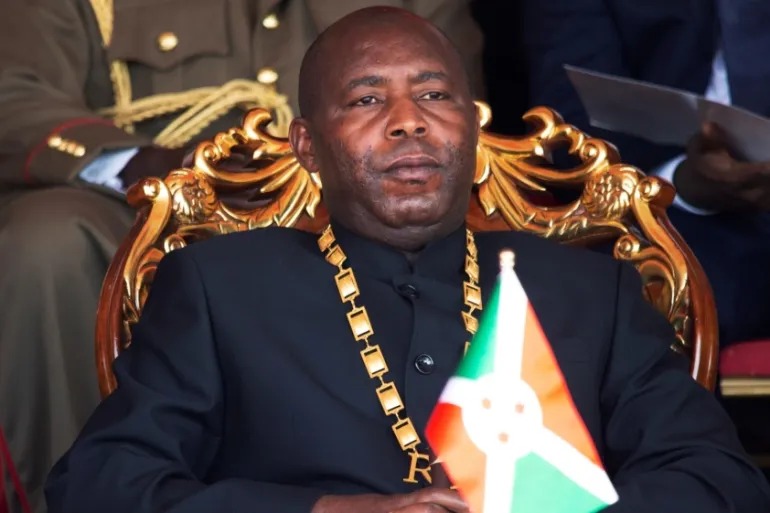
In the latest development of an ongoing dispute, Burundi has officially closed its border with Rwanda, as confirmed by the Rwandan government. The decision comes weeks after Burundi’s President Evariste Ndayishimiye accused Rwanda of harboring and training the Red Tabara rebel group.
This rebel group had claimed responsibility for an attack near Burundi’s western border with the Democratic Republic of Congo (DRC). Rwanda vehemently denied the allegations made by President Ndayishimiye.
The Rwandan government learned about the border closure through media reports, expressing its disappointment and emphasizing that the move goes against the principles of regional cooperation within the East African Community, of which both nations are members.
Yolande Makolo, a spokesperson for the Rwandan government, stated that this decision would impede the free movement of people and goods between the two countries.
The strained relations between Burundi and Rwanda have escalated due to accusations and counter-accusations. President Ndayishimiye’s claim that Rwanda is supporting a rebel group has intensified tensions. The Rwandan government has consistently rejected these accusations.
The closure of the border, as confirmed by Burundi’s Interior Minister Martin Niteretse, has immediate practical consequences. The restriction will impact the movement of people and goods between the two nations.
Niteretse, quoted by local media, asserted that the borders were closed, and individuals attempting to cross would be denied passage. However, he did not respond to Reuters’ request for further comment on the matter.
This border closure adds to the historical frosty relations among some nations within the East African Community, including Uganda, Kenya, Tanzania, South Sudan, Democratic Republic of the Congo, and Somalia, primarily driven by domestic disputes and geopolitical tensions.