



















The border officer who carried out Huawei Executive Meng Wanzhou’s immigration examination before she was arrested at Vancouver’s airport says he doesn’t believe RCMP asked that he collect the passcodes to her phones.
While talking to an evidence-gathering hearing in Meng’s B.C. Supreme Court extradition case recently, Sowmith Katragadda said he couldn’t recollect where the idea originated from.
He said he was in his superintendents’ office, where some RCMP officers were waiting to nab Meng, when he asked his colleague via radio to collect the passcodes from Meng.
During cross-examination, Meng’s lawyer, Mona Duckett asked Katragadda the question: “It was in fact the RCMP in the superintendents’ office who asked you to get the passcodes, isn’t it?”
“I do not believe so,” Katragadda replied.
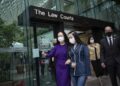
Meng’s lawyers are gathering information they feel will bolster their allegation that Canadian officials wrongly collected evidence during her arrest in 2018 at the request of American officials under the pretence of a routine immigration exam.
Meng is wanted in the United States on charges of fraud based on allegations that are connected to U.S. sanctions against Iran that both she and Huawei had denied.
The court has been told that Meng’s passcodes were collected as part of the border exam process and forwarded to RCMP alongside her electronic devices by mistake.
Katragadda has revealed that he wanted to postpone the exam as quickly as possible but was told to hold on while his superior got in touch with the Canada Border Services Agency’s national security department.
He told the court he was aware of the urgency of the case and did not want to unnecessarily delay the RCMP’s arrest of Meng.
Also, he told the court he asked Meng questions offered by the security unit and when he discovered the unit had no further guidance, he postponed the exam with the expectation that it would resume if Meng ultimately was not extradited.
Katragadda said he filled an immigration warrant that would push Meng’s return to the CBSA to complete the exam later.
Katragadda’s authority to issue Meng a warrant was challenged by Duckett who remarked that the legal wording under the Immigration and Refugee Protection Act declares “reasonable grounds to believe” a person is inadmissible as a yardstick.
Though Katragadda said he became suspicious that Meng might not be admitted to Canada due to possible criminality and national security concerns, he made it known he had not developed “reasonable grounds to believe” so.
Also, Katragadda has testified that he told the RCMP before Meng’s plane touched down that they could make a legal request for information through Section 107 of the Customs Act 8f they had questions about the exam.
Katragadda’s narrative was challenged by Duckett. Duckett suggested he only raised the issue in the superintendents’ office when RCMP became interested in the passcodes.
Katragadda responded by saying: “I disagree if it was solely for that context.”
Duckett said: “It was the passcodes — that’s when you raised the Section 107 issue in the superintendents’ office, just before the exam was adjourned.
“I do not recall what prompted me raising Section 107. I can’t say one way or another.
“Might have been the passcodes.”
Katragadda said: “Possible.”