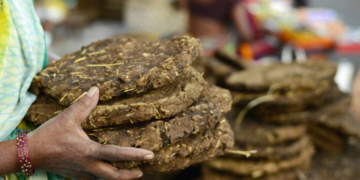




















Following the inflation that has hit feminine hygiene products, girls in rural Zimbabwe are now forced to use cow dung for sanitary wear.
Sharing her ordeal, 19-year-old Constance Dimingo, in a chat with newsmen, while in her wheelchair, said “I last wore a pad before my mother died last year”.
“Now, I have to use anything I can find, cow dung, leaves, newspapers and clothes, to stop the blood from leaking. I wish my mother was still alive to buy me pads and medication for my menstrual pain”.

According to a study by SNV Netherlands Development Organisation in Zimbabwe, Constance is one of the 72% of girls located in the rural town of Domboshava, 30 km north of the capital Harare who do not have access to commercial sanitary wear.
It was reported that for an equivalent of US$2, sanitary pads are beyond reach for most of the country’s 3 million menstruating girls, who live below the poverty datum line.
Sadly, Constance, her epileptic sister and three other girls rely completely on the assistance of their visually impaired grandmother to manage their menstrual hygiene during that time of the month.
Grandmother Vhene Gumedhe, while explaining how the cow dung process works, said “Sanitary pads are a luxury I cannot afford for my girls.
“I take the dung, mould it and leave it to dry so that it easily absorbs the blood. The girls do not put the cow pattie directly on the skin. I wrap many clothes over it to avoid itching when placed on the underwear. Then I show them how to close their private parts to block the bleeding.”
She added that, “The girls have heavy flows with cycles that typically last six days. We prefer this method because cow patties soak up a lot of blood. Once soaked, we dispose of it privately by burying it in the ground. Our Shona culture does not allow that men see such things.”
According to the Ministry of Women and Youth Affairs, 67% of girls miss school during menstruation due to a lack of access to sanitary products and clean sanitation facilities. As was the case with Constance, girls with disabilities usually drop out of school altogether.
Health experts have opined that apart from missing school, these methods are breeding grounds for salmonella, E. Coli and several bacteria that can result in reproductive health infections.
Theresa Nkhoma, Community Childcare Worker under the Ministry of Public Service, Labour and Social Welfare said “The girls complain of itching and burning sensations in the vagina. When examined at the hospitals, we notice yeast infections, urogenital tract infections and early signs of cervical cancer due to insertion in the vaginal tract.”

“We are advocating for the ladies to receive sewing machines in the villages so they can learn to make reusable pads.”
It’s praiseworthy to mention that the government of Zimbabwe has made efforts to ease the situation by scrapping taxes on all sanitary products. However, according to the Zimbabwe National Statistics Agency, period poverty is being worsened by inflation standing at over 191.6%.
SUPPORT NIGERIAN CANADIAN NEWS
If you like our work and want to keep enjoying what we offer, kindly support us by donating to the Nigerian Canadian News through the button below.
Share your thoughts in the comments section below