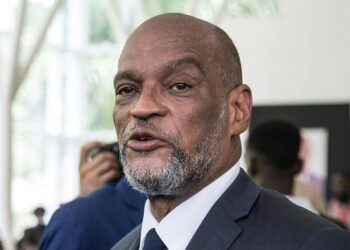
Trinidad and Tobago’s Minister of Energy and Energy Industries, Stuart Young, has rejected the proposal to declare a state of emergency (SoE) as a strategy to address the escalating crime crisis in the country. Opposition Leader Kamla Persad-Bissessar advocated for this measure during the United National Congress’ (UNC) Anti-crime Town Hall Meeting.
The idea of implementing an SoE, originally suggested by Political Analyst Dr. Indira Rampersad and supported by Persad-Bissessar, is rooted in the belief that a similar action taken in 2011 under Persad-Bissessar’s People’s Partnership government effectively tackled crime. However, Young emphasized the legal complexities and the surge of lawsuits that arose from the 2011 SoE.
In 2011, the SoE led to the apprehension of 8,178 individuals, with 7,044 facing charges for various offenses. However, numerous legal challenges emerged after many detainees were released, resulting in substantial compensations awarded to some. These court judgments highlighted the need for caution during arrests.
Prime Minister Dr. Keith Rowley announced his intention to address the crime issue at an upcoming People’s National Movement (PNM) meeting in San Juan. However, he refrained from discussing the SoE during the recent PNM mixer.
Former Police Commissioner Gary Griffith proposed utilizing anti-terrorism legislation to target gangs, emphasizing their organized structure and financial support. He suggests treating these gangs as a small army and advocates for the collective efforts of the Trinidad and Tobago Police Defence Forces under the Anti-Terrorism Act.
While the debate on implementing a state of emergency continues, the crime situation in Trinidad and Tobago worsens, marked by a surge in gang membership and an unfortunate ranking in Caribbean crime rates. The pressing need for intervention, particularly in communities and schools, has never been more evident.