


















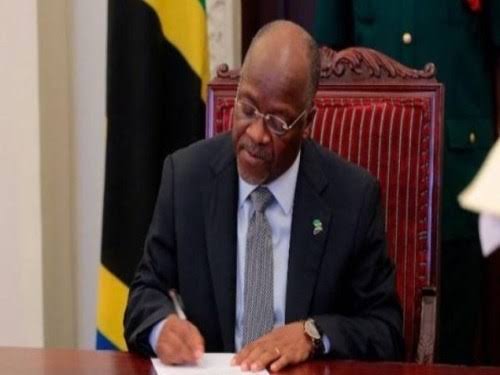
President John Magufuli of Tanzania has cancelled a Chinese loan worth $10 billion signed by his predecessor Jakaya Kikwete to construct a port at Mbegani creek in Bagamoyo over terms and conditions that, he averred, beat the logic.
According to the nation’s number one citizen, the terms of the Chinese loan agreement could only be accepted by a drunken man. In his words, Magufuli succinctly averred that “only a drunkard will accept the terms” of agreement in this loan.
It would be recalled that his predecessor, Jakaya Kikwete had signed the deal with Chinese investors to build the port on condition that they will get 30 years to guarantee on the loan and 99 years uninterrupted lease.
We also gathered that another shocking demand made by the Chinese and accepted by Kikwete administration was that the Tanzanian government will have absolutely no power to raise concerns on whoever invests in the port during that period.
Several organizations and African citizens had demanded the then President to cancel the agreement which is dubbed as the “killer Chinese loan”. Multiple reports have it that they had warned that the move will have dire consequences but their concerns were overlooked and the deal was signed.
Upon assumption office, President Magufuli initiated the renegotiation process and pressed the investors to bring down the lease period to 33 years instead of 99 years signed by the previous government.
The Magufuli led administration also made it clear that there will be no tax or utility exemption for the Chinese investors and they will need government approval to start new operations at the port. We gathered that the investors didn’t meet the deadline issued by the Magufuli government, hence, the agreement got cancelled.
Overtime, China has often been accused of luring the poor African countries in its debt-trap by providing them loans for much-needed infrastructure projects and then control them when they fail to pay off their debts.
Aside Tanzania, it could be remembered that, the Julius Maada Bio lead administration in Sierra Leon equally suspended a $400 million airport construction agreement in 2018. He was quoted to have said that: “it is uneconomical to proceed with the construction of the new airport when the existing one is grossly underutilized”. Additionally, there have been several other resistances to Chinese backed contracts in Africa. The cancellation of a USD2 billion coal plant contract in Kenya, among few others are typical examples of the growing awareness.