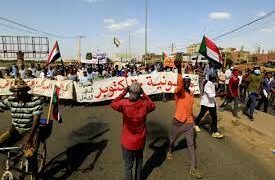




















In what has further escalated international concerns about the nation, the ruling military authority in Sudan has failed to meet the deadline of setting up a democratic government and the query arose as to when the Sudanese ruling junta and civilian groups established a civilian-led transitional government.
Contrary to expectations, the signatories of the deal set to organize a gradual transfer of power to civilians known as Framework agreement, have missed a deadline to advance towards a return to democracy.
April 11 was the timeline set up by the parties for a new prime minister and institutions of the transitional authority to have been announced.
However, the deadline elapsed after the parties twice failed to sign a final transition deal over disagreements on the integration of the paramilitary Rapid Support Forces, RSF, into the army.
Yassir Arman, a member of an umbrella group of pro-democracy factions wrote on Twitter on April 5 that the point of contention between the two forces concerns the “command and control” of the committee tasked with overseeing the reorganization.
It was gathered that divisions between Sudan’s deputy leader, who is the RSF commander- and the military chief and de facto head of Sudan, raise fears of confrontations between the army and the RSF.
It could be recalled that in recent weeks, both forces have amassed troops and weapons in and around Sudan’s capital, Khartoum. Local reports have it that the army has greatly ramped up its presence in the city center, parking armored vehicles at nearly all junctions leading to the country’s presidential palace.
Meanwhile, the Framework agreement signed last December has been contested on the streets. Political players, from former rebel leaders to grassroots pro-democracy networks, remain opposed to the deal despite brokered efforts to draw them in.
It is germane to state that Sudan has been plunged into chaos after a military coup, in October 2021 removed a government.