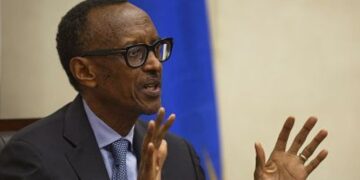




















In a solemn recent ceremony, Rwanda’s President Paul Kagame paid tribute to the victims of the 1994 genocide, acknowledging the profound loss suffered by his country and pointing to the failure of the international community to prevent the massacre. The genocide, which lasted 100 days and claimed the lives of approximately 800,000 people, primarily Tutsis but also moderate Hutus, left deep scars on Rwanda.
Speaking in Kigali, Kagame emphasized the lessons learned from the tragedy, which he said are “engraved in blood.” The genocide was sparked by the assassination of Hutu President Juvenal Habyarimana on April 6, 1994, leading to a rampage by Hutu extremists and the notorious “Interahamwe” militia. Victims were brutally killed, often through shootings, beatings, or machete attacks, fueled by virulent anti-Tutsi propaganda disseminated via media outlets.
Kagame expressed disappointment in the international community’s response, stating that it failed Rwanda due to either contempt or cowardice. His remarks were directed at an audience that included several African heads of state and former US president Bill Clinton, who had previously described the genocide as the greatest failure of his administration.
The commemorative ceremonies began with Kagame laying wreaths on mass graves and lighting a remembrance flame at the Kigali Genocide Memorial, where more than 250,000 victims are believed to be buried. Despite the tragic past, Rwanda has made strides under Kagame’s leadership, although the scars of the violence persist, affecting the wider Great Lakes region of Africa.
The international community’s inaction during the genocide remains a source of shame, with French President Emmanuel Macron expected to acknowledge France’s failure to intervene effectively. African Union chief Moussa Faki Mahamat also emphasized the collective responsibility to recognize and address past failures.
Dignitaries from around the world, including Ethiopian Prime Minister Abiy Ahmed, South African President Cyril Ramaphosa, and French Foreign Minister Stéphane Séjourné, attended the ceremonies. However, Rwanda’s much larger neighbor, the Democratic Republic of Congo (DRC), did not send a representative, amid strained relations and accusations between the two nations.
As Rwanda observes a week of national mourning, with flags flown at half-mast and strict restrictions on public activities, the country continues its quest for justice. Hundreds of genocide suspects, including those sheltering in neighboring countries, remain at large, posing ongoing challenges to reconciliation and accountability. While France has taken steps to address its role in the genocide, tensions persist between the two nations, underscoring the complexity of Rwanda’s journey towards healing and reconciliation.