


















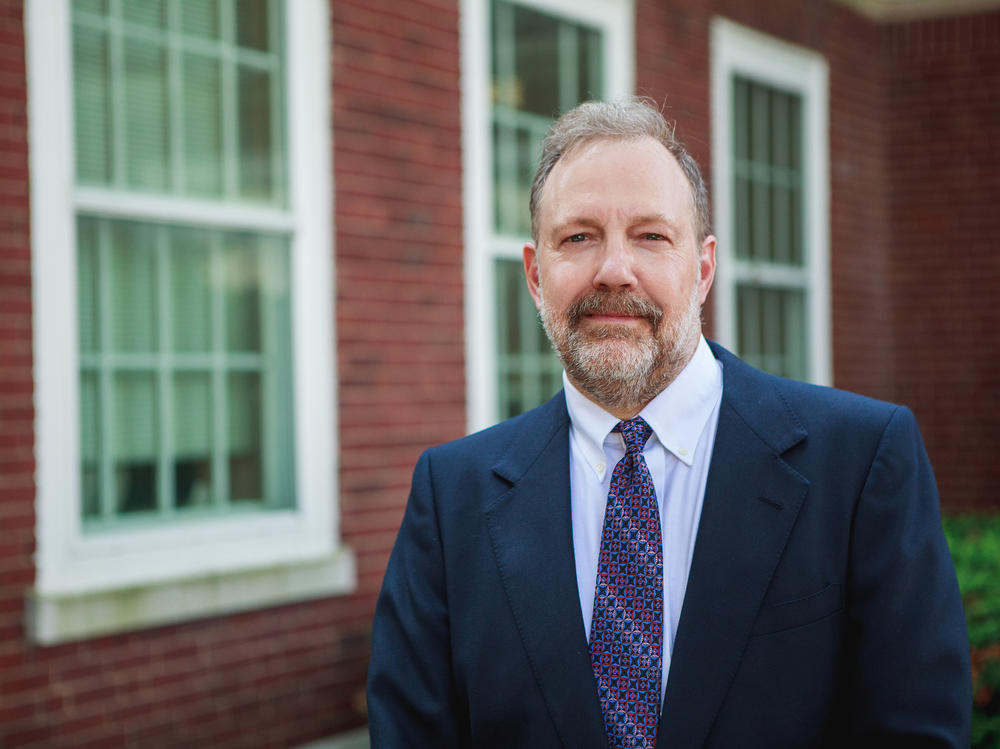
After three years of battle, the U.S. Court of Appeals for the 6th Circuit has ordered Shawnee State University in Portsmouth, Ohio, to pay one of its Professors, Nick Meriwether, $400,000 after Meriwether sued the university for demanding that he use a pronoun preferred by a student in his classroom.
While talking to Fox News, Meriwether said the demand was “an egregious assault on my freedom of speech and my religious beliefs.”
He said: “The student basically approached me after class and said that he wanted to be referred to as a female. I tried to find accommodation with the student. He was willing to use his female proper name.

“Initially, the administration was willing to go along with that, but the administration changed course and demanded that I defer to the ideology, that I refer to the student as a female. I simply could not do that.”
The “coercion” of his Christian convictions was only part of the issue Meriwether encountered. He said the other was simply a violation of his First Amendment rights.
He said: “I believe that God created men and women, male and female. But also, the idea my speech could be coerced, could be compelled by the administration … The college classroom is to be a place of debate and discussion and freewheeling ideas. The university has no place in telling professors how they are to think with the students.”
A memo was written by the university and it was put in Meriwether’s personal file. The memo said due to this issue, “Further corrective action could be taken.”
Meriwether said: “Basically, what could have happened is that I could have been fire. If that incident had occurred again and if I had again refused to use preferred or benign biological pronouns, I could have been fired. So that’s why I filed the lawsuit.”

Meriwether was represented and assisted by Alliance Defending Freedom (ADF) in his case. Tyson Langhofer, the ADF attorney representing Meriwether, says universities will hopefully sit up and take notice of this edict before making such demands on another professor.
Langhofer said: “It is done, and we are hopeful it sends a message to all universities and professors. We shouldn’t be compelling professors to say things they don’t believe.”