



















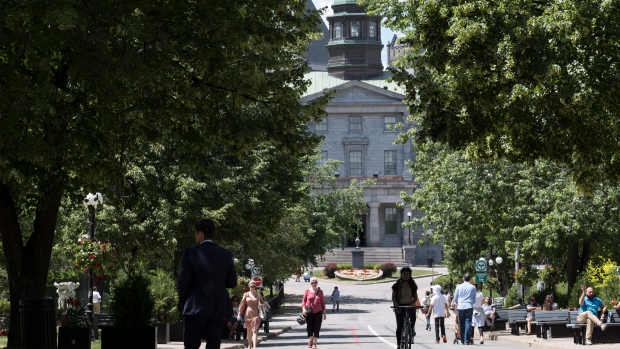
Quebec has announced a significant increase in tuition fees for out-of-province students, primarily affecting those from Ontario. The province’s Higher Education Minister, Pascale Déry, revealed that tuition for Canadian students outside Quebec would rise from $8,992 to $17,000 per year. Furthermore, the government plans to charge universities $20,000 for each international student they recruit, directing these funds exclusively to francophone institutions.
This change is expected to have the most significant impact on Quebec’s three English universities, which have a higher proportion of international and out-of-province students compared to their French counterparts. Two of these institutions, McGill University and Concordia University, are in Montreal, while Bishop’s University is in Lennoxville, Quebec, east of Montreal.
Déry argued that the new tuition rate of $17,000 is more in line with the actual cost of educating a university student in Quebec. She emphasized that many out-of-province and international students tend to leave the province after graduation, resulting in a financial burden on the government and taxpayers. Quebec currently covers a $110 million gap between what out-of-province students pay and the cost of their education, and the new fee structure is intended to recoup these funds and support French-language universities.
However, the increased tuition fees are not solely driven by financial considerations. The Quebec government claims to be responding to the perceived decline of the French language in Montreal. Language Minister Jean-François Roberge expressed concern that out-of-province students often converse in English, particularly in the city’s downtown core.
Quebec has granted universities the authority to set tuition fees for international students as they see fit, while simultaneously collecting $20,000 per student. Both McGill University and Concordia University’s leaders expressed disappointment with the government’s decision, emphasizing the importance of retaining international students to contribute to the province’s economy.
Concordia University’s president, Graham Carr, pointed out that half of their international students choose to stay in Quebec, benefiting the province’s businesses through co-op internships and other contributions. Carr expressed concerns that the higher fees would discourage out-of-province and international students from attending English-language schools.
Déry clarified that the tuition rate changes apply to all Canadian students in Quebec, with the majority being English-speaking students attending anglophone institutions. She emphasized that this decision is not aimed at discouraging anglophone students but rather at addressing the financial burden of subsidizing students who often leave Quebec.

Comparing tuition fees across Canada is challenging, as Quebec has a uniform price for all undergraduate programs, unlike other provinces with varying fees. This tuition hike will affect undergraduate and graduate students starting in 2024, while PhD and research students will remain unaffected. International agreements will also exempt certain students from the fee increase.