


















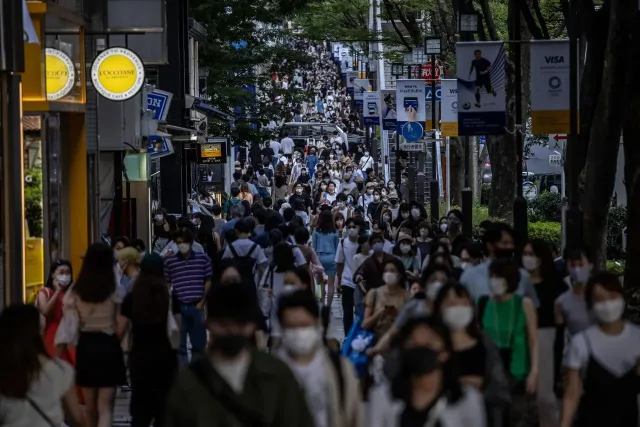
The Japanese government is offering to pay families to relocate out of its overcrowded capital Tokyo in an effort to bolster the population of its countryside.
Families in the Tokyo metropolitan area as well as those led by single parents, will be eligible to receive 1 million yen ($7,700) per child if they relocate to sparsely populated areas across the country, spokesman to the government said.
The incentives apply to children aged under 18, or dependents 18 and over if they’re still attending high school.
The government has used several incentives in the past to motivate people to leave, but this plan is more generous at three times the amount currently offered.

For decades, people across Japan have moved to urban areas because of job opportunities. Tokyo is the most populous city, in the country with roughly 37 million residents.
Before the COVID pandemic, the number of people moving into Tokyo was more than the number of those leaving the city by up to 80,000 each year, according to government statistics released in 2021.
But this migration pattern, combined with Japan’s rapidly aging population, has left rural towns with fewer and fewer residents, as well as millions of unoccupied homes. More than half of the country’s municipalities, excluding Tokyo’s 23 wards, are expected to be designated as underpopulated areas in 2022, according to a national census.
Major cities are rapidly running out of spaces and prices have skyrocketed. Tokyo is still one of the world’s most expensive cities to live in, ranking fifth globally in 2022.
For example, Tokyo has the lowest fertility rate of all 47 prefectures in Japan.
By this plan, individuals who have lived and worked in the Tokyo metropolitan area for at least five years could receive 600,000 yen ($4,500) if they moved to rural areas. That incentive is higher for couples, at 1 million yen ($7,700).
In 2022, the government gave 300,000 yen to single parents or couples with children ($2,300) per child if they relocated.
Those who relocate could work in that area, set up their own business or keep working remotely at their Tokyo-based jobs, said the government spokesperson.
“Tokyo has a very high concentration of people, and the government wants to increase the flow of people to the regional areas to revitalize areas with declining populations,” he added.
Though the numbers are still low, the initiative is gaining acceptance. In the first year of launch, only 71 households participated, compared to 1,184 households in 2021.

SUPPORT NIGERIAN CANADIAN NEWS
If you like our work and want to keep enjoying what we offer, kindly support us by donating to the Nigerian Canadian News through the button below
Share your thoughts in the comments section below
Do you want to share any news or information with us? If yes, contact the publisher at publisher@test1.nascitest.club