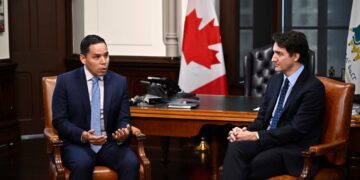




















As the federal budget deadline looms, Inuit leaders and New Democrat MPs are pressing the Trudeau government to prioritize tackling tuberculosis (TB) in Indigenous communities, highlighting the alarming rates of infection among the Inuit population.
In a pre-budget submission, Inuit Tapiriit Kanatami (ITK) emphasized the urgent need for action, citing TB rates among Inuit communities that are more than 300 times higher than those among Canadian-born non-Indigenous individuals.
ITK President Natan Obed emphasized the importance of fulfilling the government’s pledge to eliminate TB in Inuit regions by 2030, calling for a commitment of $131.6 million over seven years in the upcoming budget.
Despite TB being a preventable and curable disease, Inuit TB rates have remained largely unchanged over the past decade, widening the gap with Canadian-born non-Indigenous people. Government briefing documents from May 2023 attribute this stagnation partly to the diversion of public health resources during the COVID-19 pandemic.
Jesse Mike, director of social and cultural development at Nunavut Tunngavik Inc., pointed to systemic racism as a factor hindering urgent action on TB, echoing frustrations over government underfunding of Indigenous communities.
The government has acknowledged underlying disparities stemming from colonialism, including inadequate healthcare infrastructure, substandard housing, and chronic food insecurity, which contribute to higher TB infection rates.
While Canada pledged $16.2 million for TB elimination in the previous year’s budget, Obed insists this falls short of the funding needed to meet targets.
Meanwhile, First Nations in northern Saskatchewan, Manitoba, Ontario, and Quebec have been grappling with TB outbreaks since 2021-2022, further underscoring the widespread impact of the disease.
New Democrat MPs have raised concerns about shortages of vital medication and regulatory barriers hindering TB control efforts. Health Canada reported a shortage of the TB drug rifampin in winter 2023, with another crucial drug, rifapentine, unavailable due to a lack of licensing.
MPs Niki Ashton, Lori Idlout, and Don Davies called on Health Minister Mark Holland to address these issues, urging Ottawa to take decisive action.
In response, Indigenous Services Canada (ISC) affirmed its commitment to supporting access to life-saving drugs, highlighting efforts to maintain a stockpile of rifapentine through the Drugs for Urgent Public Health Need program.
As the federal budget deadline approaches, stakeholders emphasize the critical need for adequate funding and swift action to combat TB in Indigenous communities, underscoring the government’s responsibility to fulfill its pledges and address longstanding health disparities.