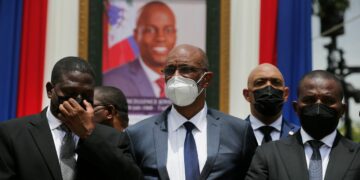



















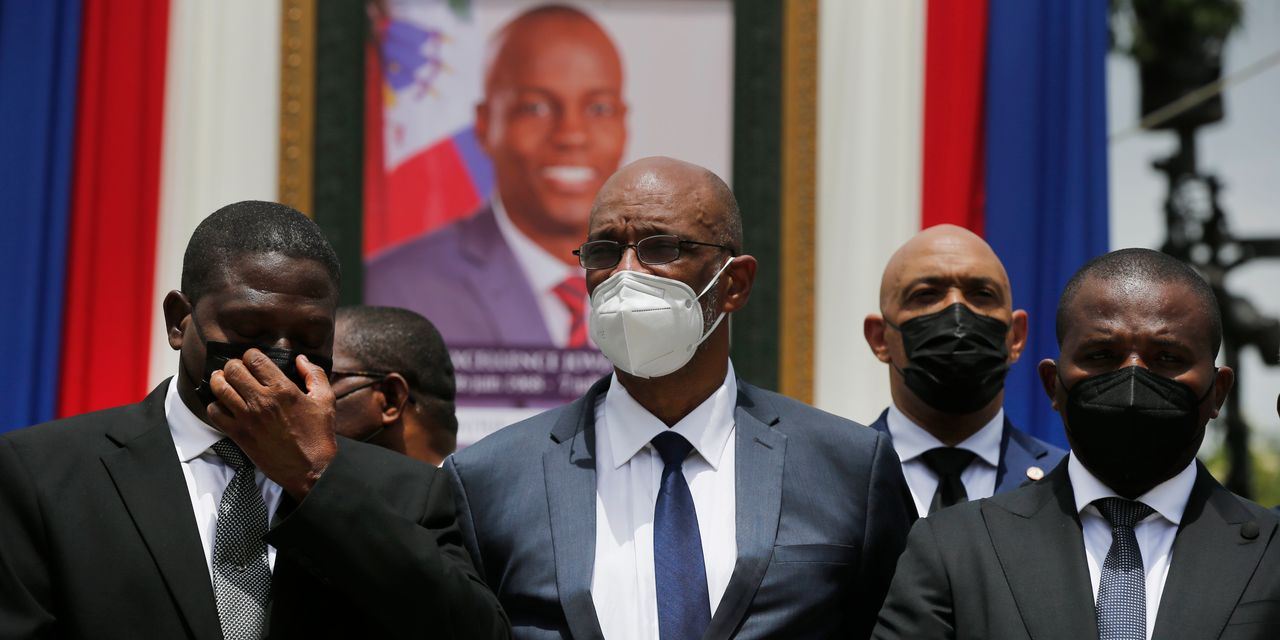
Haitian Prime Minister Ariel Henry has rejected what he described as “diversionary tactics,” following his questioning as part of investigators probe into the assassination of President Jovenel Moise.
According to local reports, Haiti’s chief public prosecutor had asked the prime minister to meet him to explain why he spoke with one of the main suspects in Moise’s killing at his private residence in the capital, Port-au-Prince, on July 7.

It would be recalled that the president’s assassination threw the Caribbean nation, which was already struggling with surging gang violence and political instability, into further disarray – and Haitians have demanded a thorough and independent investigation into what happened, with the goal of fishing out his killers.
Though he didn’t directly refer to the request, in a post on Twitter, Henry wrote: “I want to tell those who have not yet understood, that diversionary tactics to sow confusion and prevent #justice from calmly running its course will not stand”.
In another tweet, he said “The real culprits, the masterminds and sponsors of the odious assassination of President Jovenel Moise, will be identified, brought to justice and punished for their crime”.

Multiple reports have it that prosecutor Bed-Ford Claude asked Henry to appear on to answer questions about the calls. It was also disclosed that Police are still actively searching for the former official, Joseph Felix Badio, who worked in the justice ministry’s anti-corruption unit.
According to reports, the embattled Badio’s phone was allegedly tracked to the area near Moise’s residence when he called Henry twice in the early hours of July 7, after the president was assassinated.
Given that a judge has already been assigned to handle the probe, Claude in theory does not have the power to summon anyone, but he justified his request by citing the “extreme seriousness” of the investigation, which is in the “national interest”.
The nation’s law has it that a prime minister legally cannot be questioned unless the president authorizes it, but in the wake of Moise’s slaying, Haiti does not have a president.
In view of this, Claude clarified that Henry’s participation in questioning would be voluntary “given the restrictions in place” due to his post.
As of the time of filing this report, it was disclosed that so far, 44 people, including 18 Colombians and two Americans of Haitian descent, have been arrested in connection with the inquiry into the assassination of Moise.