



















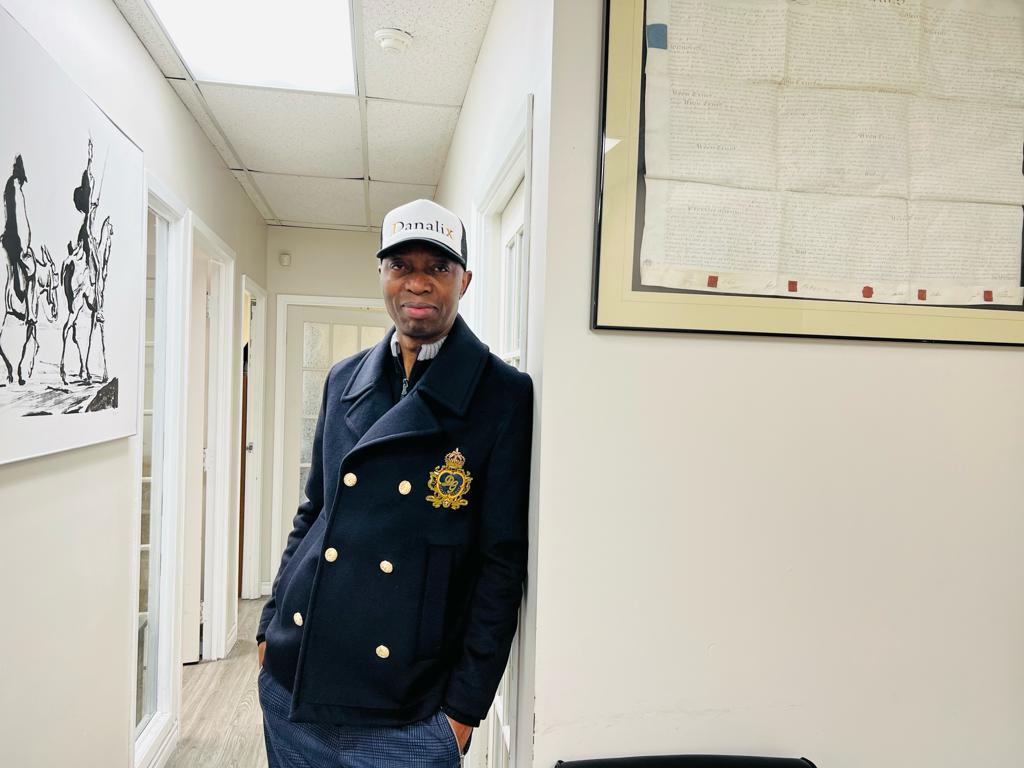
In this riveting interview with Stanley Ugagbe of The Nigerian Canadian Newspaper, Canada, Kingsley Jesuorobo, Founder, Principal and Managing Counsel at Kingsley Jesuorobo & Associates, a Canadian law firm, shared insight on his journey so far.
NCNC: Mr. Jesuorobo, your journey from practicing law in Nigeria to establishing a successful legal career in Canada is impressive. Can you share the most challenging aspect of transitioning between these two legal systems, and how your experiences have influenced your approach to legal practice?
Jesuorobo: Thank you for the accolades. Permit me to spin this a bit, and approach the question from the angle of what the benefits – as opposed to the challenges – have been. I will also touch on the challenges in any event. The sense of fulfillment that comes with accomplishing your set objective is immense. That was the first reward for me. I knew exactly where I wanted to be and I was determined to land there. I framed this mental prison which didn’t allow me to stray from the cause and the course and I enveloped myself in it. The rest is history, as they say.
In terms of challenges, they included the usual issues of having to work hard to ensure that the academic requirements were fulfilled. For instance, whilst at the University of Toronto where I undertook studies to obtain the equivalent of a Canadian law degree, it dawned on me that being unable to type was a major setback. I recall how I struggled with take-home assignments/tests that required type-written answers. In one instance, Professor Ziegel, who taught us the Law of Secured Transactions, had to give me three extra days to convert my handwritten answers into a typewritten one. It is important to stress that I didn’t get any advantage over others because my original handwritten answers were handed in prior to the submission deadline. The more irritating challenge had to do with the discouraging disposition of many unsolicited advisers who would badge into my space to rent the air with predictions of a tough future for me in the Canadian legal profession because of my Nigerian accent. Ironically, all of these pessimists were fellow Nigerians who failed to understand that accent was not a communication or language barrier. Needless to say that I was able to quickly prove them wrong with the extraordinary rate of successful outcomes of the cases I handled at the inception of my Canadian legal practice career.
As for a comparative assessment of the two legal systems, one key difference is in the professional practice regulatory terrains. In the regulation of the legal profession context, the Canadian system has a more fulsome and hands-on regulatory regime than the Nigerian system, perhaps due to the fact that citizens’ rights are more protected within the Canadian space. This is something that is certainly not salutary about the Nigerian system. I am glad that the Nigerian regulators are stepping up. As for the general legal landscape, the Nigerian justice system is more bedevilled by the scourges of delay, nepotistic judicial appointments, corruption and opaqueness than the Canadian system. The Canadian system also contends with a myriad of structural and systemic imbalances that skew the legal system against racialized people. Let me just leave this at that as it will take another engagement to unpack these systemic issues.
NCNC: You have been recognized for your outstanding contributions to human rights and your leadership roles in legal associations. How do you balance your commitment to social causes with the demands of your legal profession, and how does this dual perspective impact the ethos of Kingsley Jesuorobo and Associates?
Jesuorobo: Thank you. I have won numerous awards and recognition for my outstanding contributions to legal knowledge and for my dedication to the promotion of human rights causes.
I see mutuality and inseparability in what I will call “defensive lawyering” on the one hand and human rights advocacy on the other hand. I belong to the school of thought that finds no discernible boundary between advocating for clients in a formal court room setting on the one hand and canvassing their interests in the informal fora or public settings where public perceptions are shaped. Mind you, the audience in the informal fora include law makers, policymakers, future jurors, etc, whose dispositions in turn impact on the broader issues or interests in respect of which your particular case is usually a microcosm.
For instance, in 2010, I was invited to present a lecture on “Witchcraft Allegations, Refugee Protection and Human Rights” at the University of Oxford, United Kingdom, under the auspices of the Fahamu Refugee Program and the UNHCR. The trigger for that recognition and invitation was the victories I had recorded in my advocacy at the Federal Court of Canada with respect to cases of individuals who faced witchcraft accusations and resultant persecution.
Aside from the call of duty, I also have a natural disposition of always wanting to speak out for those who are unable or unwilling to speak for themselves due to their circumstances.
With respect to the issue of leadership, it is true that I have held, and continue to hold, leadership positions in various law associations as well as in the legal regulatory circles. I am a member of the Law Society of Ontario’s Advisory Council on Access to Innovation where for the third year running I and other experts have superintended over the review and approval of applications for licenses by innovators of technological legal services. I was the President of Canadian Association of Nigerian Lawyers (CANL) from 2017 to 2019. I am currently the chair of the Board of CANL. I am also the Vice President (North America) of African Bar Association (AfBA).
These leadership positions are manifestations of a twin reality about me. Firstly, they show peer appreciation, validation and endorsement of my character, capacity and competence in the legal profession. Secondly, they testify to my commitment to community and communality because these positions, which involve a lot of personal sacrifices, are vehicles for rendering community service and advancing collective interests that are much broader than my own.
I should also highlight the fact that I have used my law firm as a vehicle to land over four dozen lawyers into the profession through mentorship and practical supervision as an Articling Principal under the Law Society of Ontario’s Bar Admission Program. It is a thing of immense pride and privilege for me to have positively impacted so many in their quest to join our noble profession.
NCNC: Rearing your autistic son has been described as the most profoundly life-altering event for you. In what ways has this personal experience shaped your understanding of justice and influenced your advocacy within the legal profession, particularly in areas related to disability rights?
Jesuorobo: That is correct. I have a special needs child, Uware Jesuorobo, who has weathered the extraordinary challenges of his nature for close to 28 years.
As I stated previously, I have a natural inclination to defend the defenceless. The fact that I happen to have an autistic son has only reinforced my disposition towards defensive advocacy. In the legal landscape, a key component of my endeavour is ensuring that special needs individuals have both procedural and substantive access to justice. For instance, in the context of refugee law advocacy, where I am intensely active, I routinely convert the misfortune of many special needs individuals – who are victims of societal stigmatization – into opportunities for the grant of protective status by the Canadian authorities. I also seize opportunities of my public engagements to advocate that people must cease and desist from their stigmatization of special needs individuals and members of their family.
My open declaration and discussion of my son’s uniqueness and special needs situation is a signal to other similarly situated families who may not be as open about their situation due to societal stigmatization to realize the fact that they are not alone. Thankfully, many of such families regularly reach out to me to share their own experiences. Through these interactions, we gain insights on the resources, techniques and tools for tackling the many challenges faced by people in the autism spectrum.
It is worth mentioning that I have also channeled my resources towards the development of assistive technology to aid special needs individuals. I am a significant stakeholder in a special needs app project called LiL Requester (www.lilrequester.com), which was founded by the parents of a special needs child. LiL Requester is an augumentative, alternative communication (AAC) software that helps with the development and enhancement of communication skills of people who have difficulty with speech or language. Lil’ Requester is downloadable on the App Store. We are in the advanced stages of developing and deploying the Android version of the app. Lil Requester currently has thousands of users.
NCNC: Your involvement in co-founding Canada’s first 24-hour black television network and serving as Chief Legal Counsel at FEVA TV is noteworthy. How has this experience in media law complemented your legal practice, and how do you see the intersection of law and media evolving in the future?
Jesuorobo: My endeavours in these spheres were both challenging and fulfilling. I must salute the illustrious vision and dedication of Idahosa Wells Okunbo of blessed memory who single-handedly financed the undertaking. Birthing FEVA TV was an opportunity for me to show the infinity of the human capacity once we direct our minds towards any specific objective. It was very easy for me to blend into and operate within the space of media law because the foundational principles upon which many of our engagements were based revolved around administrative law and contract law, both of which I not only have training and experience in but which I have a flair for. Media law is certainly an area where I have always directed my gaze. Even though my other preoccupations have interfered with a focus in that direction, I still have the intention to develop a full-fledged engagement in that sphere one way or the other, directly or indirectly.
NCNC: Over the years, you’ve won numerous victories for clients at Canada’s Federal Court. Can you discuss a particularly challenging case where your legal acumen played a crucial role in securing a favorable outcome, showcasing the depth of expertise at Kingsley Jesuorobo and Associates?
Jesuorobo: True it is that I have waged many successful battles at the Federal Court of Canada on behalf of my clients. It is hard to single out one case as the most challenging as they come with a myriad of complexities. I would say that it is the deportation litigations that present the worst challenges. In that context, you are faced with extremely time-sensitive complexities and a stack of odds that weigh against your clients whose cases are usually deemed to have had the benefit of sundry adjudicative processes to no avail. To prevail in these scenarios, one requires exceptional legal acumen and professional deftness. One of the most profound ones involved the stoppage of the deportation of 7 clients at once. I accomplished that feat through a tag-team effort with my then professional colleague, Munyonzwe Hamalengwa. We used the Federal Court to tame the excesses of Canadian authorities who were engaged in the disproportionate group deportations of Nigerians from Canada at the time. Another remarkable feat I recorded was my unprecedented and trail-blazing successful use of the Covid-19 pandemic to prevent the deportation of my client who had already lost her initial application for stay of her deportation at the Federal Court just few days prior.
NCNC: In the competitive field of Canadian law, can you elaborate on the strategies employed by Kingsley Jesuorobo and Associates to stay ahead, both in terms of academic knowledge and practical insights, ensuring the firm’s continued success in providing exceptional legal services?
Jesuorobo: I believe that some of the answers to this particular question lie in my previous responses. I will add that I love scholarship and I routinely give lectures in sundry fora, including Universities and Bar conferences. I also occasionally write legal articles. These endeavours keep me intellectually grounded.
Furthermore, I think it will be instructive for me to emphasize that I have always had a solution-driven knack to confront challenges instead of folding my arms and bemoaning my fate or the fate of those who entrust me with the responsibility of defending their interests. I am a pragmatic or realistic optimist. I mine my mind to no end in all my professional endeavours.
I believe in the infinity of redress possibilities within the legal landscape as long as the practitioner does not become a prisoner of rigid and inflexible interpretation of the law, legal jurisprudence and precedents. This philosophy lies at the heart of my groundbreaking successes in my legal career. This philosophy has also propelled me to found and launch Danalix (www.danalix.com), an all-in-one legal and business management software solution. Danalix simultaneously serves professionals in the legal sector globally as a regulatory compliance and business management solution and as an ecosystem of specialized legal knowledge, thereby arming them with technological tools to easily meet their professional needs.
NCNC: In 2003 and 2004, you mounted ground-breaking successful challenges at Canada’s Federal Court in cases of mass deportation. Can you shed light on the strategic considerations behind these challenges and how they have impacted immigration policies in Canada?
Jesuorobo: Certainly, I can. I have often stressed the fact that despite the fact that Canada is one of the best countries in the world in terms of respect for human rights, the undeniable truth remains that the country is still afflicted with serious and fundamental inequities and systemic imbalances. Overzealous and/or ill-minded officials still abuse their powers, with some masking their discriminatory excesses under the cover of law enforcement. It behooves those of us in the advocacy occupations, especially the legal profession, to step up and deploy our skills to spot, unmask and repel these misdeeds, especially when they are directed towards members of our racialized communities. That was exactly what played for instance in 2003 and 2004 when I spearheaded the mounting of ground-breaking legal challenges that eventually forced the Canadian authorities to stop the discriminatory mass deportation of Nigerian nationals from Canada.
NCNC: Your role as a mentor, having trained over three dozen lawyers and paralegals, is commendable. How do you approach mentorship, and what qualities do you believe are essential for the next generation of legal professionals to succeed in the dynamic legal landscape?
Jesuorobo: The number is now actually higher – over four dozen lawyers and paralegals, and the number is still growing. I am proud to say that I have an open-door, receptive and passionate policy with respect to mentorship. I don’t think I would be exaggerating if I say that among my peers and law firm size in the Canadian legal landscape, I have mentored the most number of lawyers and paralegals. It is very fulfilling for me to behold the fact that many of the folks I trained have become very successful lawyers themselves. I often enjoin them to extend the same mentorship courtesy to others who aspire to join the profession.
As for the qualities that ensure professional success, I would list courage, commitment to scholarship, integrity, tough love for your clients, and professional camaraderie as the most important professional values. By professional camaraderie, I mean bonding and banding with members of your professional community and sharing information about how to confront challenges and drawing strength, inspiration and hope therefrom.