


















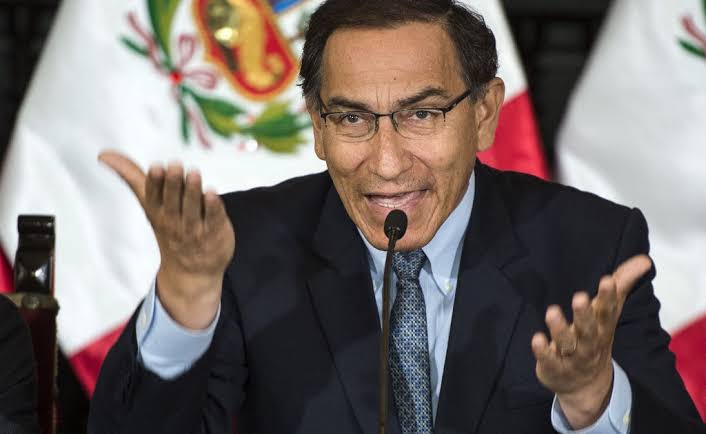
Again, Peru has proven that no one is above the law as the nation has banned its former President Martín Vizcarra from holding public office for 10 years in a unanimous vote by the country’s congress after he allegedly jumped the queue to receive a COVID-19 vaccine.
Local reports have it that Vizcarra was found guilty of influence peddling, collusion and making false declarations in relation to Peru’s VIP Vaccines scandal which saw many ministers and public officials receive Sinopharm vaccines before they were publicly available in the country.
The reports stated that congress approved his temporary banning from public office by 86 votes in favour and zero against.
The congress also disqualified the former Health Minister Pilar Mazzetti from holding public office for eight years; and former Foreign Minister Elizabeth Astete for a year.
It is important to note that both former ministers received the vaccine and resigned during the subsequent scandal, reports said. However, all three have denied having used their positions to obtain early access to vaccines.
It would be recalled that Vizcarra had in February said he and his wife were inoculated in October of the previous year as volunteers for the Sinopharm trial in Peru – a claim the university hosting the trial denied.
The embattled ex leader reportedly assumed office in March 2018 on a promise to curb endemic corruption in public office and ran the country until being impeached by Congress in November last year on separate corruption charges, which he has continued to deny.
As of the time of the latest ugly incident, he had been due to take up a seat in Congress following the recent elections in Peru, having obtained the highest number of votes cast for any legislator.
Meanwhile, the nation heads for a second round of voting for president in June, with right-wing presidential candidate Keiko Fujimori going head-to-head with socialist Pedro Castillo, a previously little-known union leader and teacher, who shocked the Andean nation by taking 19.1 percent of the vote during the first round of ballot.