


















A European Union’s top court has given a ruling that employers of labour may prohibit wearing of visible religious or political belief symbols, such as hijabs.
However, the Luxembourg-based tribunal disclosed in its ruling recently that courts in the bloc’s 27 member states should find out whether the ban is in line with a “genuine need” on the employer’s part. The ruling said they must also factor in employees rights and interests which include taking into account national legislation on freedom of religion.
The court said: “A prohibition on wearing any visible form of expression of political, philosophical or religious beliefs in the workplace may be justified by the employer’s need to present a neutral image towards customers or to prevent social disputes.

“However, that justification must correspond to a genuine need on the part of the employer and, in reconciling the rights and interests at issue, the national courts may take into account the specific context of their Member State and, in particular, more favourable national provisions on the protection of freedom of religion.”
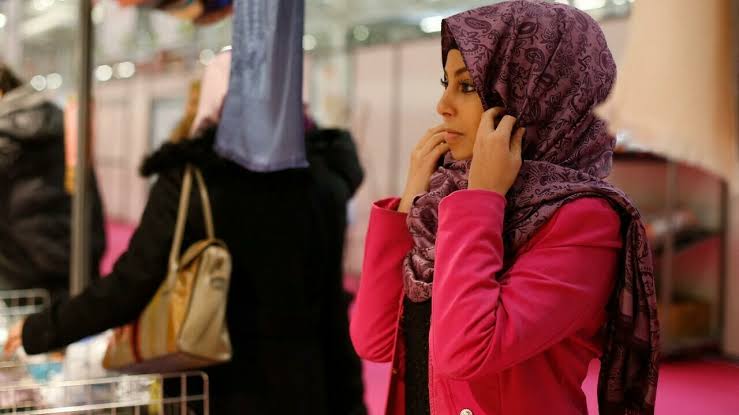
The case was brought before the court by two females in Germany who were suspended at their workplaces after they started rocking hijab, a headscarf worn by a lot of Muslim women that feel it is part of their religion.
The Muslim women – a special need care at a charitable association’s childcare centre in Hamburg, and a Mueller pharmacy chain’s cashier – were not wearing hijabs when they started in their jobs, but chose to start wearing them years later after they came back from parental leave.
Court documents reveal their respective employer told them that this dressing was not permitted, and were at different points either suspended, told not to wear it to work or put on a different job.
Hijab related issue have brewed controversy all over Europe for years and triggered sharp divisions among integrating Muslims.
In a 2017 ruling, the Luxembourg-based European Union court had already said that staff may be prohibited by companies from putting on headscarves and other conspicuous religious symbols under certain conditions. This ruling had brewed a huge backlash among different faith groups.
Over five million Muslims reside in Germany, making them the biggest religious minority group in the country.