


















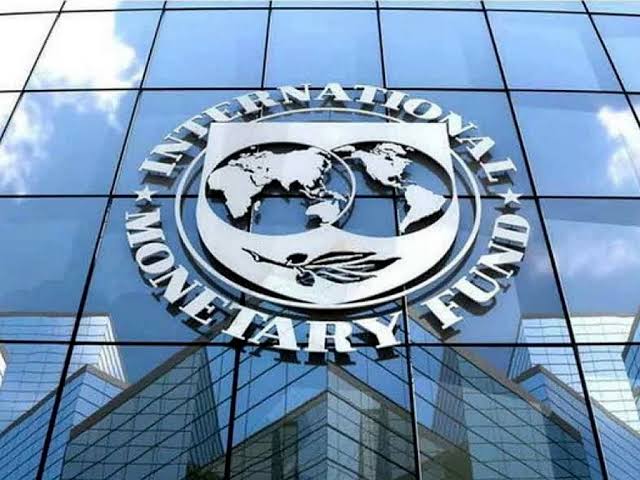
Thousands of people particularly left leaning political parties and social movements in Argentina have rallied in the nation’s capital, Buenos Aires, urging their government not to sign any kind of debt restructuring deal with the International Monetary Fund (IMF).
Local reports have it that Argentina’s government is in the midst of negotiations with the IMF to restructure $44bn that it owes to the global fund.

Official records have it that the loan dates back to 2018, when then-president Mauricio Macri signed on to a $57bn agreement with the international lender of last resort, making it the largest loan in IMF history. Some $44bn was dispersed, but President Alberto Fernandez, who took office in 2020, has refused the rest, and set out to renegotiate repayment terms of the loan.
It was said that the current agreement calls for repayments of $19bn each in 2022 and 2023 — amounts that many say the government cannot afford to pay back amid a groaning recession that has seen inflation skyrocket and poverty continue to climb.
Thousands marched through the streets of Buenos Aires and arrived at the Plaza de Mayo chanting, “Out, out, fund, out!” Some of their placards read “No to a deal with the IMF” as colourful banners of the country’s largest social and left-wing organizations rippled under the beating sun and anti-IMF slogans roared on the loudspeakers.
The protesters said the debt is “unpayable” and urged the government to snap out of it.
“It is not about agreeing to postpone payments, because even after delaying, when the moment arrives, it will not be possible to pay. There are no resources and there are urgent needs in Argentina to solve immediately,” said Julio Gambina, a member of the Argentine Left Political Movement.
“People might not be aware of a lot of things, but they are aware of the fact that the words ‘International Monetary Fund’ in this country … have always brought us more misery and more dependency,” said Carlos Aznarez of Organizaciones Libres del Pueblo, one of the groups that organised the rally.
“People understand that we are headed for disaster if we sign this agreement,” he said.
It is believed that the protesters fear an increase in the cost of utilities, an increase in interest rates, a reduction in public works, cutbacks to state employees, pensions and social spending. These are measures that Argentines have seen before, some as recently as in 2018, when the government imposed an IMF-backed plan to slash public spending in order to pay off debt.
But it’s the role the IMF played leading up to and during the financial meltdown of 2001 that continues to enrage many Argentines. At the time, the government devalued its currency and banned bank withdrawals after defaulted on its $93bn debt, triggering widespread social unrest as unemployment and poverty skyrocketed.
President Alberto Fernandez, who lost political support in last month’s mid-term legislative elections, has been talking tough, vowing that Argentina “will not go down on its knees” before the IMF, while at the same time promising to pay back what it owes.