

By Stanley Ugagbe
The controversy over the actual housing deficit figure in the country has continued to be a predominant issue. While the Federal Government is insisting that the estimated 22 million housing deficit has been reduced through several housing projects it has executed over the years, the reality on ground does not tally with the claim. With many homeless Nigerians on the increase, figures and realism show that the issue is more severe than being projected. Despite the position of the government on the deficit, Vice President Osinbajo vindicated experts’ view on the figure when he said “What is obvious is that the deficit in housing requirement is unacceptably high”
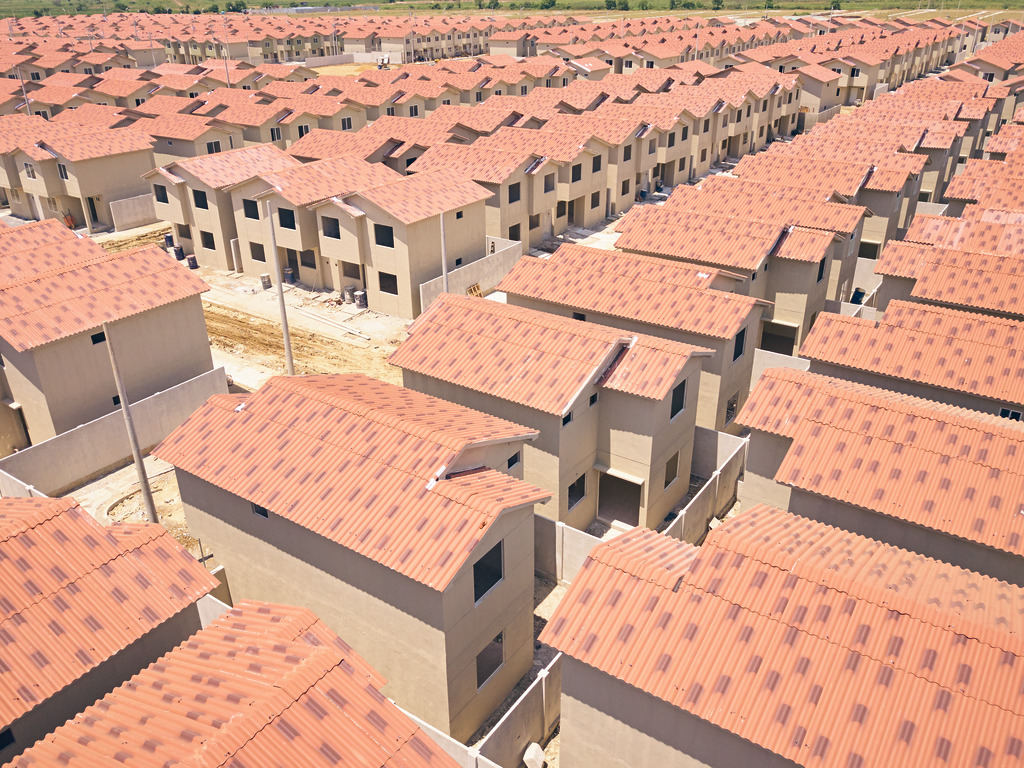
The Minister of Works and Housing, Babatunde Fashola had some time back disclosed that the Federal Government is currently constructing affordable homes in 34 states of the federation. According to the Minister, this is part of the fulfillment of the model National Housing Programme, which is aimed at providing acceptable and affordable houses for Nigerians.
It is admissible that there have been various initiatives by the Federal Government to bridge Nigeria’s huge housing deficit; but unfortunately, most of these initiatives have not yielded their desired results. It would be recalled that the Federal Mortgage Bank of Nigeria (FMBN) established in 1956, (originally known as the Nigerian Building Society) had the strategic intent of supplying the mortgage and housing markets with sustainable liquidity in order to support the advancement of homeownership amongst Nigerians. But, more than 60 years down the line, FMBN is yet to deliver affordable and modern houses to majority of Nigerians, despite the obvious untapped opportunities in the housing market.
The government’s plan of reducing the housing deficit through affordable housing delivery, though commendable, has continued to be a mirage and this has been a major setback for the nation. It is on this premise that this piece is calling for urgent overhauling of the housing ecosystem and establishment of the right policies that will make affordable housing delivery possible.
It has strongly been projected by experts that affordable housing cannot be solved through contracts by government; this is because houses built by contractors cannot be affordable since they are profit oriented. For affordable housing to be achieved, developers need to have their target audience in mind and build structures they can afford and not what the developers have in mind.
I believe that incremental housing is the key strategy to solving the problem of affordable housing which will in turn reduce the housing deficit. It must be noted that housing payment plan that is above the national minimum wage does not reflect the reality of affordable housing.
And then, developers must first identify the financial capacity of those they are building for before embarking on the project. Afterwards, developers must avoid luxuries while building as this will increase cost and then defeat the goal of the project. Government and private developers need to develop building strategies that are friendly with low income earners so as to achieve the goal of affordable housing.
The government and private developers need to understand that there is a clear cut difference between necessity and luxury. Since the building process starts from design, it must be tailored according to the financial capability of the target public.
Again, I strongly believe that site and services, proper enforcement of regulations, and locations are key factors in deliver affordable housing. Also, I call on the Federal Government to place priority on data collation, collaborating with the National Bureau of Statistics (NBS), National Real Estate Data Committee and other notable organizations that are into data collation.


