

By Stanley Ugagbe
The lingering drama between Ethiopia and Egypt has hit a new rock as the former has accused the latter of seeking to obstruct the ongoing talks for an agreement over the filling of the reservoir of the Grand Ethiopian Renaissance Dam (GERD) in abide to refer the dispute to the Security Council.
The Nigerian Canadian News gathered that the accusation comes after recent statements by the Egyptian Foreign Minister Sameh Shoukry at a public event held in Cairo about “Egyptian diplomacy: dealing with the current challenges.”.
We gathered that after blaming Ethiopia for dodging negotiations and intransigence, Shukri emphasized that his government has to consider other options such as resorting to the UN Security Council to prevent Ethiopia from taking unilateral action that negatively affects Egypt’s water rights.
The Ethiopian minister made his statement while the three countries were negotiating via videoconference an agreement on the first filling of the $4 billion hydropower dam initiated by the Sudanese government.
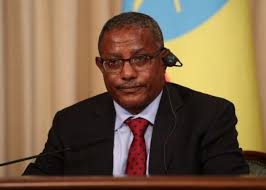
Fielding questions from newsmen in Addis Ababa, Ethiopian Foreign Minister Gedu Andargachew averred that Egypt is making efforts to “take the issue to the UN Security Council” while negotiating with his country and Sudan.
Andargachew said “While we invite them for negotiation open-minded and discussing issues based on principles, Egyptians are thinking in a different way and to disrupt the negotiation”.
He said Egypt has left no stone unturned to first stop the construction and then “hold us back when we already started”
While calling on the international community to put pressure on Egypt to act as per the principles of a just and equitable share of the Nile water, the minister said “Now, they are working to defame and weaken Ethiopia”.
Talks between three countries recently focused on drought management rules during the long term filling and operation of the GERD.
On its part, the Sudanese government said that “great progress” was achieved on the operation of the GERD, the safety of the dam, the long-term operation, data exchange and the technical committee for the needed coordination between the upstream and downstream countries.
Reacting to Andargachew’s claims, Egypt’s Minister of Foreign Affairs Sameh Shoukry debunked the remarks that the nation is escaping negotiations of the Ethiopian Renaissance Dam by referring the issue to the United Nations Security Council.
In a statement made available to newsmen, Shoukry said that Egypt has engaged in negotiations with Ethiopia for nearly a decade, which dismisses any possibility that the country is avoiding talks.
He added, “Egypt is always ready to engage in any negotiations to reach a fair agreement those serves all three countries’ interests.”
Shoukry further challenged Ethiopia to immediately resume
negotiations and declare compliance with the international obligations that
stipulate not to fill the dam unilaterally.
In an interview with the Associated Press,
Shoukry accused Ethiopian officials of stoking antagonism between the
countries.
“Egypt wants the United Nations Security Council to undertake its responsibilities and prevent Ethiopia from starting to fill its massive, newly built hydroelectric dam on the Nile River in July amid a breakdown in negotiations”.
“The responsibility of the Security Council is to address a pertinent threat to international peace and security, and certainly the unilateral actions by Ethiopia in this regard would constitute such a threat,” the minister clarified.
Recall that Ethiopia had announced that it would begin filling the dam’s reservoir in July even after the latest round of talks with Egypt and Sudan failed to reach a deal governing how the dam will be filled and operated.
But Shoukry warned that filling the reservoir without an accord would violate the 2015 declaration of principles governing their talks — and rule out a return to negotiations.
He said “We are not seeking any coercive action by the Security Council”. In a three-page letter to the council, Egypt asked the council to call Ethiopia back into talks for a “fair and balanced solution” and to urge it to refrain from unilateral acts, warning that filling the dam without a deal “constitutes a clear and present danger to Egypt” with repercussions that “threaten international peace and security.”


