

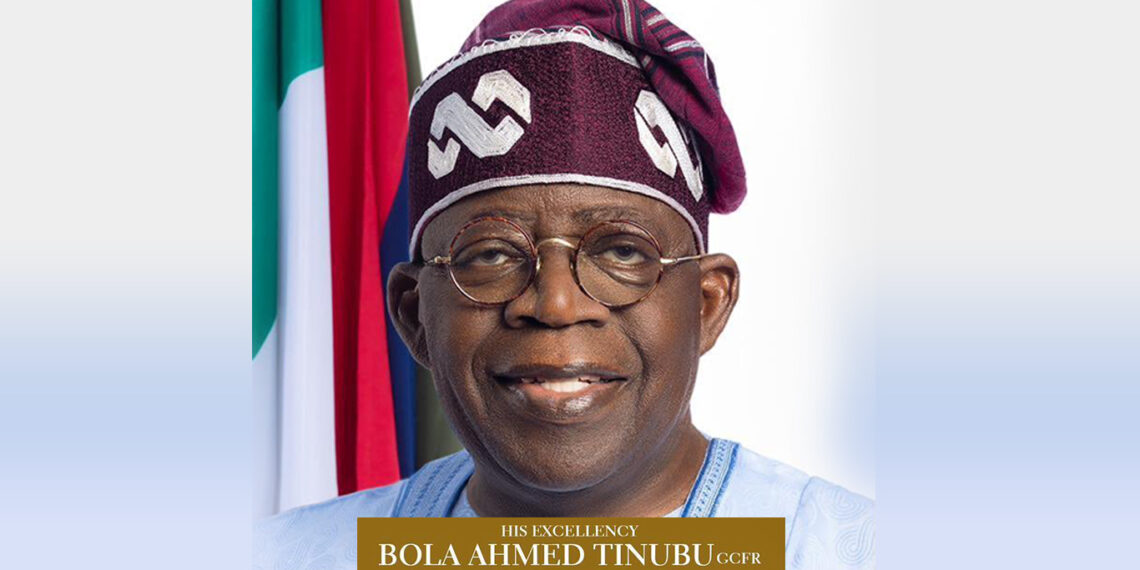
The Nigerian Government has stated the Education Tax under the Federal Inland Revenue Service (FIRS) would serve as one of the funding sources for the recently established Student Loan Scheme.
This was as stated as the government detailed the conditions that an applicant must meet to be eligible for the loan.
The government said the scheme would be totally automated to ensure zero human involvement in the application and processing of the loans to applicants.
While addressing State House Correspondents after briefing President Bola Tinubu on the impending launch of the scheme at the Aso Rock Villa recently, FIRS Chairman, Dr Zacch Adedeji, said: “That is why the education tax fund is one of the sources of funding that we will use to execute this programme.”
One week earlier, the Minister of State for Education, Dr Yusuf Sununu, stated that the scheme was on track to begin this month as the President promised last October.
Adedeji spoke alongside the Executive Secretary of the Student Loan Board, Dr Akintunde Sawyerr. He said channelling the education tax into the scheme was the administration’s way of being accountable to Nigerian taxpayers.
He said: “This is in fulfilment of Mr President’s promise that we will make education accessible to all. This is one of the schemes where we will be applying the education tax that we collect.
“It is a way of being accountable to the taxpayers because the essence of education tax is to consolidate and restore education integrity and quality. In fulfilling that part of the Act, education tax fund is one of the sources of funding that we will use to execute this programme.”

Meanwhile, the Executive Secretary of the Scheme, Sawyerr, who delivered his first public briefing on the programme, made it known that eligible applicants would send their requests through the loan app or website, affirming that the scheme would not have any human involvement.
He listed the application process and said prospective candidates must avail their JAMB registration number, date of birth, National Identification Number and Biometric Verification Number, among others.
He said: “The applicant will go on to a portal, or they will engage with the app. They will have to put in certain pieces of information that make them eligible, such as their JAMB number and, of course, the tie-in to their date of birth.
“Further pieces of information include their NIN, which confirms that they are Nigerians. This loan scheme is being paid for by Nigerian taxpayers. So, it’s for Nigerians and the NIN helps verify and qualify them as such.
“Their BVN is for financial inclusion because this scheme in itself will, at some point, be able to empower students, so we need to know they have bank accounts. We need to know where their accounts are to be able to access those accounts.
“It will also have their matric number and admission number so that we can firmly establish which institution they are going to because one of the key elements of this is that once we have received applications and those applications are approved, the fees or the tuition requirements in terms of financials will be transferred directly to the institution. That in itself has benefits for the institution.”
He likened the loan to a bridge linking the need for further education and the funds to do so and explained that the government was keen to ensure that young Nigerians do not fail to acquire tertiary education due to lack of funds.
He said: “The intention behind it is to ensure that the reason for not being able to go on and further your education at a tertiary level is not for the lack of finance. This law seeks to bridge the gap between the desire to study and the capacity to go further. It seeks to bridge that gap that is created by lack of finance and funding.”
He explained further that the scheme would enable Nigerians to choose a career trajectory of their choice rather than forcing them into other paths because they were not able to acquire vital education.
Also, he affirmed that the loan would help to reduce the dangerous journey embarked upon by Nigerian youths across the Sahel to Europe in search of greener pastures.
He said: “Some of the opportunities provided by the scheme include enrolling intending students in teacher training programmes and vocational skills.
“The programme provides opportunities for Nigerian students who want to go into the academic and get a university degree or perhaps want the technical side and acquire some vocational skills and also in the teacher training space.
“This intervention will affect the lives of many Nigerian youths because that’s usually the bracket to further their education. It will enable us to intervene and support families, particularly the needy.”


