

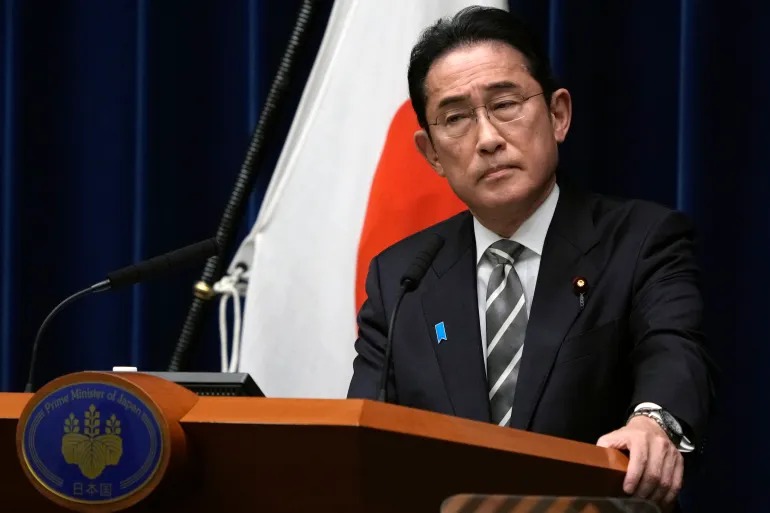
Japanese Prime Minister Fumio Kishida is overhauling his government in the wake of a significant corruption scandal within the ruling party, resulting in the resignations of several ministers, including close ally and government spokesman Hirokazu Matsuno.
Matsuno, holding the official title of Chief Cabinet Secretary, announced his resignation on Thursday, following the departure of Economy and Industry Minister Yasutoshi Nishimura. Reports from Jiji Press and other Japanese media indicate that Internal Affairs Minister Junji Suzuki and Agriculture Minister Ichiro Miyashita are also stepping down, with five deputy ministers slated to be dismissed.
All implicated ministers belong to the so-called Abe faction, the largest and most influential group within the ruling Liberal Democratic Party (LDP). Japanese prosecutors have initiated a criminal investigation into the faction over allegations of receiving approximately 500 million yen ($3.5 million) in fundraising proceeds that are reportedly missing from party accounts.
“In light of the various allegations made regarding political funds, which have shaken the public trust in politics, and the various allegations made regarding my own political funds, I have submitted my resignation,” stated Matsuno during a press conference. He will be succeeded by Yoshimasa Hayashi, the former foreign minister.
In response to the scandal, Kishida announced a government revamp, expressing regret over the deepening political distrust and pledging urgent measures to address the situation. “We will tackle the various issues surrounding political funds head-on… I will make efforts like a ball of fire and lead the LDP to restore the public’s trust,” he assured reporters.
An investigation is expected to commence with searches of lawmakers’ offices for evidence as early as next week. Reports suggest that other LDP factions, including one led by Kishida until last week, may also come under scrutiny.
Facing a decline in public support to around 23 percent, the lowest since taking office in October 2021, Kishida has reshuffled his cabinet twice. Despite the drop in support for the LDP, the fractured opposition faces challenges in making sustained inroads against the ruling party, and Kishida is not required to hold an election until October 2025.
Opposition groups, led by the Constitutional Democratic Party (CDPJ) of Japan, initiated an unsuccessful no-confidence motion against Kishida on Wednesday. CDPJ leader Kenta Izumi criticized the LDP, questioning its ability to self-cleanse and expressing doubt about selecting individuals not involved in slush funds.
The scandal revolves around allegations that Matsuno diverted over 10 million yen ($70,600) from faction fundraising events to a slush fund, while Nishimura reportedly retained 1 million yen ($7,000). Vice Defence Minister Hiroyuki Miyazawa disclosed that he was instructed not to record kickbacks in the funds’ records and, although feeling compelled to speak out, defended the practice as legal.
Collecting proceeds from party events and paying kickbacks to lawmakers are not illegal in Japan if appropriately recorded under the political funds law. Not reporting such payments carries a potential penalty of up to five years in prison, though prosecution is challenging without proof of a specific instruction to an accountant not to report the transfer.
SUPPORT NIGERIAN CANADIAN NEWS
If you like our work and want to keep enjoying what we offer, kindly support us by donating to the Nigerian Canadian News through the button below
Share your thoughts in the comments section below
Do you want to share any news or information with us? If yes, contact the publisher at publisher@test1.nascitest.club


