

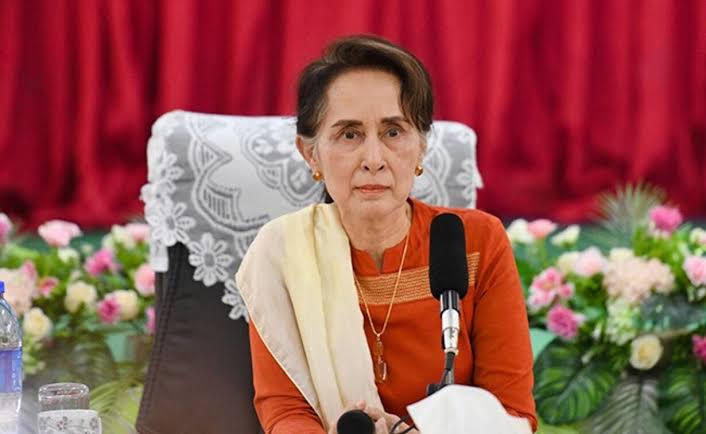
The ousted leader of Myanmar, Aung San Suu Kyi has been sentenced to four years imprisonment on charges of inciting dissent and breaking COVID-19 pandemic rules.
Local reports have it that the verdict by a special court in Myanmar is the first ruling connected to a series of criminal charges the 76-year-old Nobel laureate is facing after the country’s army seized power in February. If she is found guilty in all the cases, she could be in prison for life.
It would be recalled that former President Win Myint was also jailed for four years under the same charges.
Recall that Myanmar’s army had toppled Suu Kyi’s civilian elected government in a coup after it claimed massive voting fraud by her National League for Democracy party. However, independent election observers did not detect any major irregularities.
Remarkably,Suu Kyi had previously spent 15 years under house arrest in Myanmar, starting in 1989.
Harping on the development, Phil Robertson, Deputy Asia Director for Human Rights Watch, said the charges were “bogus” and that this “trial was one hundred percent political from day one, and was done with clear intent to lock her away for good so she can never again contest military rule.”
On her part, the United Nations’ Human Rights Chief, Michelle Bachelet said it was a “sham trial” and that the verdict would only “deepen rejection of the coup.”
Reports have it that Suu Kyi has a reputation as an international democracy advocate and humanitarian but her international profile was badly damaged for failing to speak out on behalf of the Rohingya, a minority group living in Myanmar – formerly known as Burma – where they are not recognized by the government, denied citizenship and have been subject to violent persecution by Myanmar’s Buddhist nationalist majority.
As of February when she was detained, Suu Kyi was Myanmar’s state counselor and foreign minister, roles that gave her powers similar to that of a prime minister in Myanmar’s then slow transition to democracy from military rule.
It was also gathered that February’s coup led to nationwide nonviolent demonstrations, which security forces quashed with deadly force.


